
Learning their craft: How Alfa Laval works with brewers to meet industry challenges
When it comes to the world of craft beer, every day is a learning day – even when you are already an industry expert. To keep on top of new brewing techniques, supply challenges, sustainability factors, and shifting consumer trends across multiple geographies, you need to be well and truly immersed in the global craft brewing scene and armed with an in-depth knowledge.
DATE 2026-08-11So it is for Joakim Grell, who, alongside brewing his own beer since 2009, travels the world meeting craft brewers with a passion for their art in his role as Global Sales Manager, Brewery & Beverage, High Speed Separators at Alfa Laval.
“To work in a sector like this, you have to be constantly educating yourself and following the market,” explains Joakim, who has a diploma in craft brewing from the Scandinavian School of Brewing. “You need a direct line to breweries, but you also need to keep your ears to the railway listen to many different podcasts, read articles, follow brewers on social media to see their ideas, listen to discussion forums, and attend conferences.”
Fortunately, such is the passion of those involved in craft brewing, that there is no shortage of material and sources to discover news and updates from the heart of the industry.
Joakim says: “I try to follow all of these different platforms to see where the industry is at and understand what we in Alfa Laval need to do to be able to adjust to the market. The great thing is that you learn a lot and, if you have a passion for it yourself, you also have a lot of fun.
“If a customer can see you know the industry well and really know what you’re talking about, then there is immediately a level of trust. It allows for you to directly talk in detail and talk around their challenges and needs. The only way to be successful in this market is to be authentic and show that here at Alfa Laval, we have the same expertise and passion as them.”
To some craft beer is beer that comes from an independently owned brewery rather than a corporation, for others, it is beer that is made in such a way that cost is a secondary factor behind taste and craftmanship, and then there are those who say that a brewery has to be under a certain size to qualify as a craft brewery.
The truth probably lies somewhere in the middle of these overlapping definitions, but whatever the definition, it is fair to say that the modern craft brewery industry was seeded by the microbreweries that emerged in the US and UK in the 1970s, as a reaction against the mass-produced beer that was flooding the market.
Taking many of the traditional techniques and ingredients used in beer-loving European countries such as Belgium and the UK, the industry has flourished, with flavour, agility and experimentation the watchwords.
Indeed, such has been the success of modern IPAs that inevitably the larger global brewers have moved in to try and take a share of the market, causing the true craft brewers to need to re-invent and reimagine themselves to ensure they retain their fiercely independent status.
“Agility and diversification have certainly become real drivers for today’s craft brewers, not just so they can continue to explore new beers and flavours, but also so that they can align with modern tastes, which are constantly evolving ” says Joakim.
“Now you have brewers who are no longer just making IPAs, they have diversified to make all kinds of beverages like kombuchas, low and no alcohol beers, and sour beers, to accommodate the broadening tastes out there.”
That diversification does not just come in the form of different brews, as Joakim also notes that breweries are investing in making their premises into social venues.
“In many ways, this is like going full circle,” he explains. “Brewers have gone back to focusing on their own taprooms, which becomes part of the communal experience of drinking, also fitting in with the increasing amount of social media content featuring people sharing their experiences.”
This latter point may well be part of the reason that the craft beer market is mitigating some of the impacts being felt by the rest of the brewing industry, driven by the Gen Z trend towards healthier drinking habits.
Joakim says: “On one side, craft brewers can meet this challenge with a more diverse product range, including healthier drinks, and alongside this, they can offer a venue experience for Gen Z and younger millennials, who are very conscious of mental health and understand the need to meet and commune. They can find this in taprooms where they don’t have to drink alcohol if they do not want to but instead use the tap rooms to build community.”
This is where Joakim notes that the craft beer culture is moving at different speeds and in different directions in different parts of the world.
While the taproom vibe may not yet really have fully reached Stockholm, where Joakim himself is based, it is big in other parts of Europe where craft beer is more established, like the UK. And while some more traditional beer-drinking countries may not embrace some of the more creative flavours being introduced, such as fruit and sour beers, in South America, they could be the saviours of the industry.
“Brazil is a really interesting case,” says Joakim. “They have around 2,000 breweries, lots of them very small, and the quality when it comes to brewing traditional IPA can be very varied.
“However, they have really taken to sour and fruit beers, combining local produce with their beverages to create some unique flavours, which are really fun to work with, and a real source of pride. The drink works really well in hot countries, and it is a great example of how the craft brewing industry is adapting in different parts of the world and focusing on locality.”
It is a very different story in France, for instance, where there is a long tradition of appreciating the provenance of beverages through the wine culture, and this has translated into the development of a craft beer market that enjoys stronger IPA beers around 8.0% ABV, which goes against the global trend towards lower ABVs. That is true in China and Southeast Asia – and it certainly is for Joakim’s own brewing community of friends in Sweden, who look to produce beers under 4% to support social, communal drinking without the headaches!
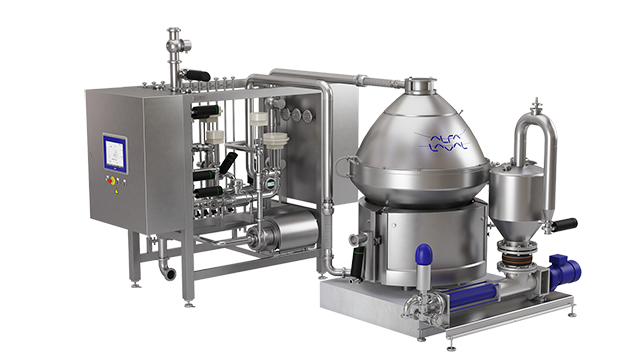
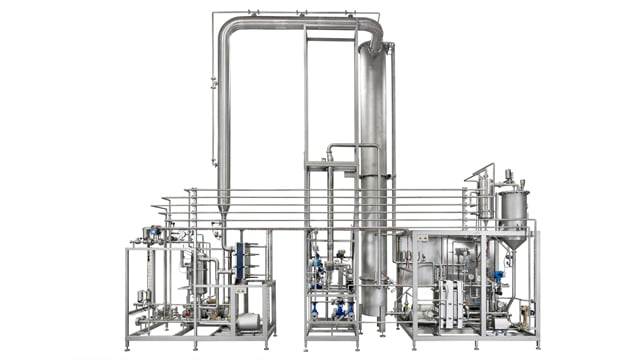
Joakim’s passion for craft beer is matched only by his enthusiasm for separation technology, and he believes the centrifuge equipment of Alfa Laval brings huge benefits in terms of yield, quality, and sustainability for craft brewers.
“Our role as Alfa Laval is to be a trusted expert partner as we lead the way in this technology, and our installed base proves to be the best marketing and PR you can get for our centrifuges, because craft brewing is a very close community, and word soon gets around about how well our equipment performs.
“It treats the product very gently, so you can still make quality beers of any type, and it is designed to use less energy and water. At a time when the market is challenging, these factors give customers a real competitive edge.”
Joakim is inspired by his own colleagues around the world, who share his passions, and sales teams around the globe receive regular training in craft brewing to ensure they are up to date with the latest trends and technologies.
“This comes back to education,” he says. “There is a lot to learn about the many tools available on the market, such as advanced hop products or different types of yeast that are good at emphasising different flavours to make a diverse selection of beers and other beverages. We work hard to train our sales team so that they can talk to customers in depth about this and explain the benefits of Alfa Laval’s separator technology within this environment.”
Joakim highlights that some craft brewers still don’t use any form of separation technology, while others have them but do not use them to their full effect.
“A lot of breweries that have one don’t realise that you can use them for different types of beer,” says Joakim. “They are thinking of it just as a filter, but we explain to them that a centrifuge is much more than that; it is a tool to help them create exactly what they want and not just making clear beer.
“With a centrifuge you are really just simulating what happens in a tank but at a much higher G-Force. You can remove things you don’t want, but also keep the stuff you do. Since we have a deep knowledge and experience of separation in this and other industries, we try to educate brewers about the flexibility they can get with their centrifuges.
“For instance, some customers may have only used them for clear beer and are afraid they will strip away any haziness in their cloudy beers, but that will not be the case. You can basically use a centrifuge on every single beer in the brewery.”
In terms of sustainability, craft breweries are not big consumers of energy compared to a lot of industries, and the biggest challenge is utilising ingredients to their fullest, especially water. Being able to produce more beer from the same amount of materials is important when the raw material prices have skyrocketed and, for many, rents have spiralled.
“Every piece of profit that craft brewers can get right now is incredibly important to offset the increase in raw materials and rent,” says Joakim. “This is not just new breweries, it is also older breweries, who maybe had leases that are now coming to an end.
“With a new centrifuge, there may be an initial capital cost, but payback is typically less than three years, often less than two, and in some instances, less than one. It is all about preparation and making the investment to protect yourself against future challenges.”
Assessing the future, Joakim says that the first place to look should be the US, as it is here where there is the highest number of breweries per capita – around 9,500 across the country.
“In craft brewing, what happens in the US generally repeats itself in other parts of the world,” says Joakim. “Currently, there is some consolidation going on, and a lot of this is in the form of smaller businesses combining to form bigger and stronger breweries. It’s a great example of that community spirit in the industry, giving brewers a chance to hopefully withstand the turbulence in the market.
“There are challenging times ahead for sure, but craft brewing has a history of agility and a strong survival instinct, and if a brewer is smart and focuses on quality, the brand, the right price points and the venue, then they can do really well.”


Tags
All