
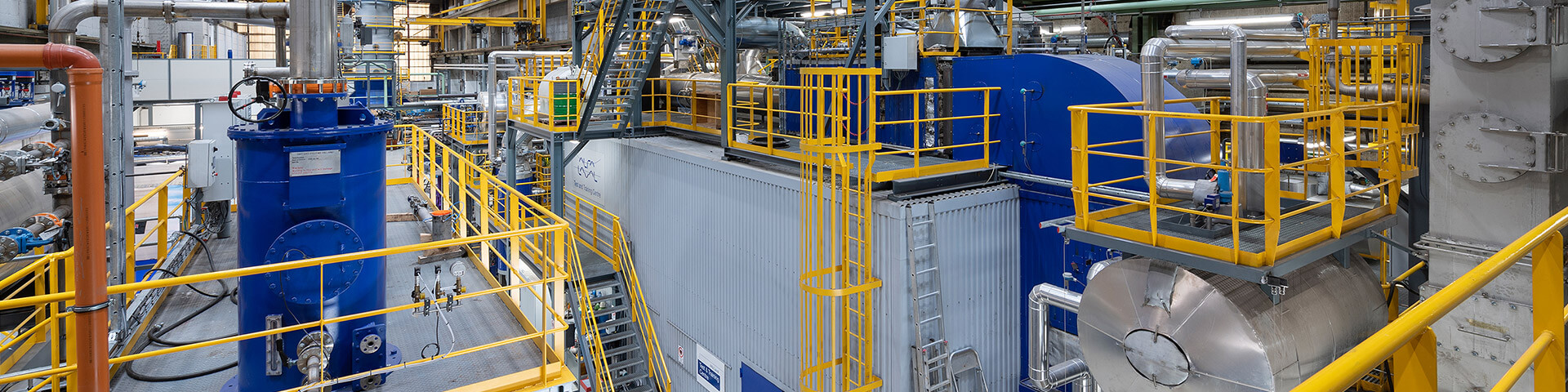
Alfa Laval Marine Innovation Centre
The Alfa Laval Marine Innovation Centre is a unique research and collaboration hub that’s shaping the future of global shipping. For more than a decade, the centre has tested ideas, equipment and process lines on the scale of an oceangoing vessel. Today, it’s accelerating vital solutions for a fast-changing industry, supporting the move to alternative marine fuels and zero-carbon technologies.
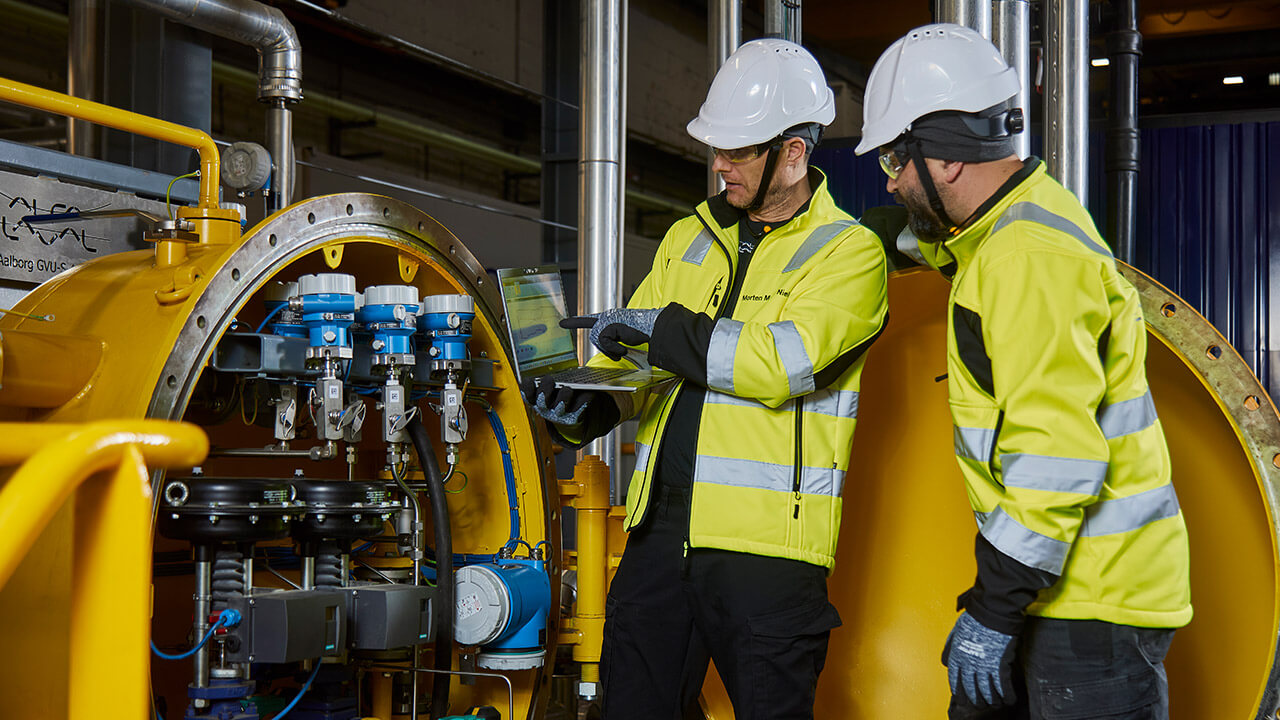
Functions of the Alfa Laval Marine Innovation Centre
- Full-scale testing under realistic maritime conditions, with control and flexibility not possible at sea
- Validating solutions for LNG, biofuels, methanol, ethanol and ammonia – or their combination
- Reducing risk as customers navigate new operating challenges and tightening regulations
- Supporting deep collaboration with customers, partners, research institutes and others across the industry
Established in 2014, the Alfa Laval Marine Innovation Centre is a platform for finding, developing and validating groundbreaking solutions. It’s central to our alternative fuels road map – LNG as marine fuel, methanol as marine fuel, ammonia as marine fuel and marine biofuels. But it’s also a place to explore your challenges and goals on the route to sustainable shipping. Contact us to take advantage of the centre’s unique resources, including the knowledge of our Alfa Laval experts.
What makes the Alfa Laval Marine Innovation Centre unique?
Located in Aalborg, Denmark, the Alfa Laval Marine Innovation Centre is exceptional in scale and scope. No other marine facility offers the same state-of-the-art resources and flexible capabilities.
2,800 m2 of testing space
The centre’s testing space provides high flexibility, allowing even the largest equipment to be tested at full scale. This includes a full-size Alfa Laval Gas Combustion Unit (GCU) like the ones found on LNG carriers, installed for combustion testing of LNG boil-off gas. Using real-scale equipment means results transfer directly to onboard experience.
Full-scale machine room simulation
All key onboard systems are found at the centre, most notably in a machine room simulation around a 2 MW diesel engine. The equipment there is incorporated into complete process lines, just as it would be at sea. This means that system integration can be tested and validated along with the systems themselves.
A direct flow of seawater
The centre is a controlled environment on land, but it fully replicates maritime conditions – right down to the water used in testing. The centre’s systems receive natural seawater from the Limfjord, which connects the Kattegat Strait with the North Sea. This creates a truly realistic test setup.
Combustion research lab
The centre is driving the fuel transition with deep insights into the combustion behaviour of alternative marine fuels. The combustion setup comprises LNG, biofuels, methanol, ethanol and ammonia – including ammonia release mitigation (ARMS). Both individual fuels and fuel mixtures can be evaluated with full control.
Focus areas and pilot plants
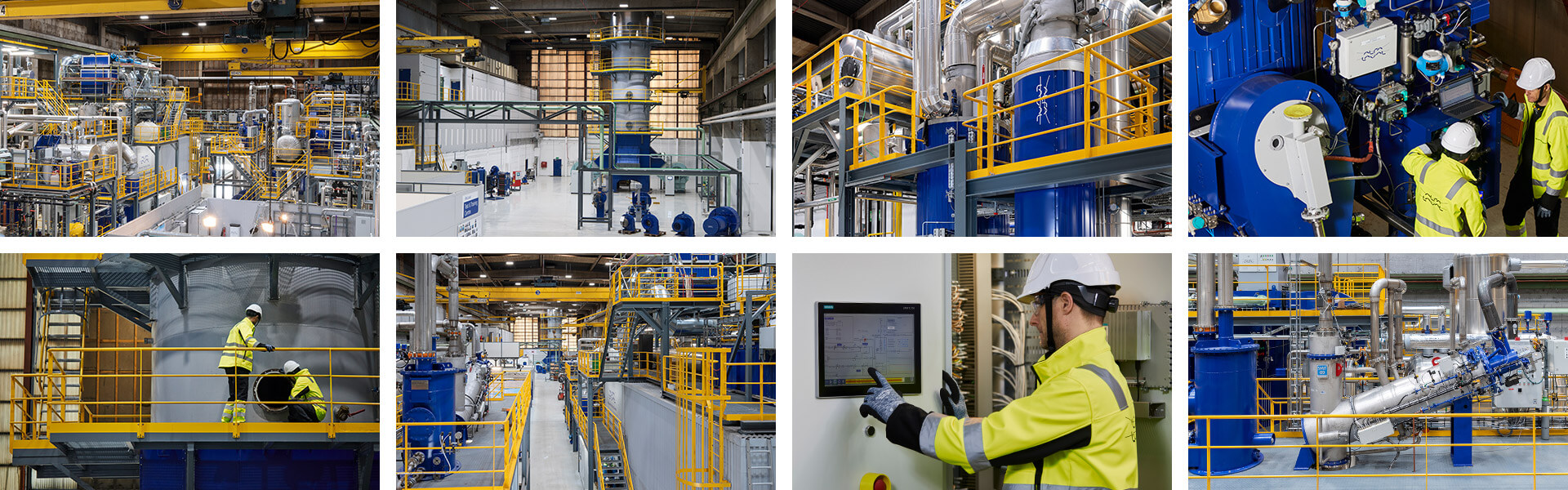
Beyond the machine room simulation and combustion lab, there are numerous flexible spaces at the centre. These can be configured for specific projects over the short or long term. Dedicated research and testing can be conducted in small scale or large, supporting product development or investigation into customer challenges.
Advanced safety system
The centre supports innovative testing while ensuring safe conditions for everyone involved or nearby – as well as the surrounding environment. Its fuel tanks and distribution systems have double-wall encapsulation, and sensors detect any spillage or traces of toxic or combustible gases. Emissions are measured carefully during all combustion tests.
Integrated control system
The equipment at the centre is overseen by the same integrated control system. Systems can be steered and monitored in real time, either in isolation or in combination. This means that all or any part of the centre can be applied towards specific projects and research goals.
Energy management
Energy efficiency is in constant focus at the centre, just as it is on board. The power produced by the centre’s 2 MW engine is fed back into the local grid. Likewise, the excess heat after waste heat recovery is used for municipal district heating.
Frequently asked questions
Why was the Alfa Laval Test & Training Centre renamed?
The name Alfa Laval Marine Innovation Centre more accurately reflects what the centre is and does. While testing is central to its work, the goal behind the testing is far deeper: innovating solutions for marine decarbonization and sustainable shipping.
The new name also connects the facility to our other Alfa Laval Innovation Centres – but it highlights the centre’s full maritime scope.
What is the purpose of the Alfa Laval Marine Innovation Centre?
The centre has two key roles. One is supporting Alfa Laval’s own innovation processes, to secure faster and more accurate research and development. The other is supporting collaboration with customers, partners, research institutes, classification societies and others. Both aspects are needed in a rapidly evolving marine industry, where alternative marine fuels and tightening environmental regulations are changing vessel operations.
What has the Alfa Laval Marine Innovation Centre contributed?
The centre has driven innovation in many areas, but especially in the areas of environmental compliance and the marine fuel transition.
Early on, PureSOx exhaust gas cleaning systems and PureBallast ballast water management systems were developed and validated here. So were key solutions for LNG as fuel, such as the ability to use Alfa Laval Aalborg marine boilers to manage LNG boil-off gas.
Today, the centre is exploring the full range of potential marine fuels, as well as the energy management solutions needed to make them feasible. The latter include electric hybrid boilers developed and validated at the centre.
Can I visit or conduct projects the Alfa Laval Marine Innovation Centre?
Yes. The centre welcomes customers, partners, classification societies, academic researchers and others – above all as collaborators. While visits can be arranged, the centre is an active R&D facility and a hub for co-creation.
If you have onboard challenges to investigate or new ideas to develop, the centre’s capabilities and controlled environment are ideal. Contacting us below is the easiest way to get started.
Collaborate at the Alfa Laval Marine Innovation Centre
At the Alfa Laval Marine Innovation Centre, solutions take shape at scale. Working closely with our experts, you can investigate onboard challenges, explore equipment configurations and develop new ideas. From today’s marine fuels to tomorrow’s, in areas from energy management to environmental compliance, the centre’s unique capabilities can support you in your goals.
Ready to get started? Tell us what you’d like to achieve.