
Where reliability meets innovation: variety is the spice of life in Edible Oils & Fats
In the world of food processing, oils and fats are grouped together like a dynamic duo – two vital components forming one industry that is in the vanguard in the battle to feed the world’s growing population.
DATE 2026-08-11However, as Alfa Laval specialist Will Dooley identifies, the two areas actually have many points of difference when it comes to the challenges they face and the trends that shape their evolution across the globe.
As Global Sales Engineer at Alfa Laval, working in BU Separation Technologies, Will sees those challenges and trends up close, and notes that when it comes to rendering animal fats or processing edible oils, one side of this Oils & Fats family is definitely more predictable than the other.
“Looking at the state of the industry, when it comes to stability, then you look at the fats and protein side of things, which is really a relatively mature market,” says Will. “Here, our customers want consistency, robustness and reliability from their processing equipment. They want to get the very most out of each product with minimal waste, and that is what Alfa Laval has been supplying them for many years – technology that lasts and does the job.”
The processing of animal fats is generally the side of the industry that supplies tried and tested, traditional products, which will always have their place within cuisine and cosmetics – everything from shortenings to emollient creams.
Will says: “There are a lot of interesting things happening in the fats and protein space for sure, with alternative meats, yellow pea processing and even insects, and while these are likely to grow, they will remain a small part of the overall market – certainly in the short-term – and the rendering of meat and fish will remain the real heart of this part of the industry.”
As the world of edible oils is more exposed to the vagaries of climate change and crop yield volatility, there is generally a greater focus on agility and innovation in finding processing solutions here, as producers seek to adapt to circumstances and make more for less. They look to deploy the latest technological developments to keep them ahead of the game and mitigate against external factors which, while out of their control, can still have severe impacts upon their operations.
“This is a more volatile sector because of the raw materials involved, so an expert partner like Alfa Laval has to be flexible and constantly on its toes,” explains Will, who is well designed himself for adaptability, coming originally from the UK, with an English father and Finnish mother, and now living and working in Sweden.
Will and his colleagues are constantly driven to find solutions that fit with the changing challenges faced by edible oil producers and the shifting demands being made by consumers, both of which can be different from one geographical area to another.
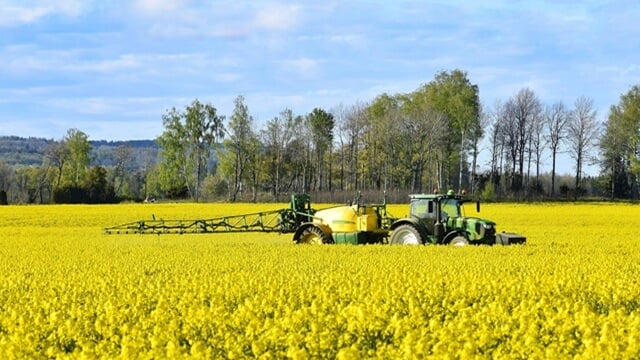
One of the major challenges is the extremes of climate that most growers face these days, which makes an already uncertain activity – the growing and harvesting of crops – even more unpredictable.
“This is something we are constantly hearing from industry players, who are always concerned about the weather because it has such a major impact on the supply of the raw materials, and therefore the success of their business,” says Will. “It makes predictions difficult, and if you are reliant on one harvest through the year, you can see why it is such an issue.”
When it comes to supplying and supporting producers, Will and his colleagues will often be engaging with integrators who are managing supply chains and food lines, and sometimes deal directly with the end users themselves.
“Communication is key,” he says. “We have developed good relationships where we can understand what is going on in their lives on the front line and appreciate their challenges and concerns, and there is no doubt at the moment that the main one is yield.”
Against this background of unpredictability, there is the certainty of a growing global demand for edible oils to help feed expanding populations in disparate geographies, with different oils in demand in different regions.
South East Asian countries, for example, generally favour seed oils such as palm oil or soybean oil, while olive oil holds a traditional place of popularity in the Mediterranean and other European markets.
Even here, however, there are some old certainties and stereotypes that are shifting. Affordability is often a key factor, and this recently drove sunflower oil into the number one spot in Spain, overtaking olive oil in its very heartland.
“This just shows how fluctuating the markets for oil are,” says Will. “Of course, olive oil is still popular in Spain, but it is also generally more expensive. It may sound like sacrilege, but at the end of the day many people don’t care whether it’s sunflower, rapeseed or olive oil – they will go for whatever is cheapest. Edible oil products can be perceived as interchangeable in this way, which is quite a unique element for this industry.”
That is not to say that olive oil is on the decline – far from it, according to Will.
“Olive oil is at the heart of the healthy Mediterranean diet, and many consumers are prioritizing healthy, nutritious options that are low in saturated fats, so olive oil fits the bill,” he says. “It can also be mechanically processed with no chemicals, and there is a consumer perception that this makes it even healthier.
“It’s nowhere near the biggest-selling oil, but I definitely see there being some growth in the market because of those health benefits and because there are new markets opening up elsewhere, like China and India, where consumers are becoming more open to trying new things.”
It is not just the climate that is affecting edible oil production, as the global geopolitical situation also has its impacts. The war in Ukraine, for example, means that country’s production and distribution of rapeseed has been significantly impacted, while the general urbanization of populations means there are labour shortages affecting the farming of crops.
And when it comes to the pressing issues regarding global gas and oil supplies for fuel, which are sharpened with conflict in the Middle East, then added focus may come on the edible oils market, where the emergence of biodiesel production has become a feature in recent years.
“I can see there being a growth in the soybean market, not necessarily because of consumer demand for it as an edible oil, but because it can be used as a raw material in making sustainable biodiesel,” explains Will. “The same is true with used cooking oil and palm oil.”
All of this makes for a challenging and complex environment, but one in which resilient, flexible and imaginative producers can still thrive.
“This is what makes this industry so interesting to work in,” says Will. “Alfa Laval has always been at the forefront when it comes to finding solutions, and it is rewarding to be a part of that at this crucial time.
“We have a broad view and expertise across so many different products and processes in the edible oils and fats sector, and we are committed to playing a vital role in feeding and fuelling the world into the future.”


Tags
All