Canola & vegetable oils: operational solutions for high-volume production
With their high smoke points, neutral tastes, and affordability, canola and vegetable oils are popular in kitchens around the world. Ideal for frying, baking and roasting – and including the health benefits of omega acids – they are the go-to oils for many households, which makes for a robust market where efficient high-volume production can reap significant rewards.
Canola (or rapeseed) oil is made from processing the canola plant, famous for its bright yellow flowers. It is grown in abundance in the Asia-Pacific region, particularly Canada and China, which grow almost 40 million tonnes a year between them. The term "canola" was coined in Canada and is commonly understood to mean "Canadian Oil, Low Acid," referring to the crop's low erucic acid content.
Meanwhile, vegetable oil is produced in many regions around the world from a varied blend of seeds such as soybean, corn and sunflower (and, indeed, canola).
The stats tell the story of growth: the global canola oil market was valued at USD 38.91 billion in 2025 and is projected to rise to USD 55.63 billion by 2034 [https://www.fortunebusinessinsights.com/rapeseed-oil-market-102443], while the wider vegetable oil market reached USD 294.0 billion in 2025 and is predicted to reach 446.8 billion by 2034 [https://www.imarcgroup.com/vegetable-oil-market-statistics#:~:text=The%20global%20vegetable%20oil%20market,4.62%25%20from%202026%20to%202034.]
But it is not just kitchen preferences that are super-charging these markets, as both canola and vegetable oils are used in cosmetics and, with growing importance, as raw materials for the burgeoning biofuel industry, as the world seeks sustainable solutions to fossil fuels and subsequent CO2 impacts.
In a world with a growing population projected to reach 10.3 billion by the mid-2080s [https://www.un.org/en/global-issues/population], it's clear that canola and vegetable oils are going to be playing a key part in the feeding and fuelling of the world, so finding operational solutions for high-volume production benefits everyone on the planet.
How are canola oil and vegetable oil processed?
The answers to the questions, 'how is canola oil processed' and 'how are vegetable oils processed' are broadly similar, although each oilseed requires specific preparation steps depending on its physical characteristics.
For both oils, the processing involves a number of key stages, all of which can be optimized with advanced comprehensive equipment and engineering from Alfa Laval, which has a long-standing experience of working within the industry. By maximizing the process at every stage at scale, the collective impact delivers significant benefits and the total operational solution for high-volume producers.
Ultimately, whether customers are looking for complete systems to refine edible oils, or for specific components and equipment to upgrade their existing process lines, Alfa Laval is there as an expert partner, with a global and local presence.
Production stages
Canola oil production starts with the preparation and pre-conditioning, where the harvested seeds are air-cleaned, flaked by heavy rollers and then heated to deactivate the enzymes and concentrate the oil droplets.
From this point, the extraction processes of all seed oils follow a similar path, with the pre-pressing of the heated flakes, which squeezes out most of the oil (crude canola oil - about 75% in the case of canola) and the remainder is contained within a residual solid cake, which is then treated with a solvent that dissolves this oil in a solution known as miscella.
To release this remaining oil, the miscella is heated to evaporate the solvent, and the solvent-free oil is mixed with crude canola oil that has been extracted through these stages and is then refined through a series of processes.
The processes used are similar to the pretreatments used to remove impurities from food or biodiesel feedstocks, so whether it is for human or technical consumption, the road to feeding and/or fuelling the world starts here.
Degumming
All oils contain gums, or gum-like material, consisting mainly of phospholipids together with carbohydrates, proteins and nitrogen compounds, and trace metals. These impurities can be hydratable or non-hydratable and must be removed during degumming.
If left in the oil, they can form emulsions, increase oil losses, reduce refining efficiency and create problems during downstream processes, including bleaching and high-temperature deodorization.
Degumming involves adding water and, in some cases, acids, enzymes or other processing aids to remove phospholipids and related impurities from crude oil. Depending on the oil and refining objectives, a range of degumming methods may be used. With decades of industry experience and leading process technologies, Alfa Laval helps producers optimize this critical stage of refining. An efficient degumming process can deliver significant benefits in terms of yield, product quality, shelf life, operating costs and sustainability.
Most seed oils contain hydratable phospholipids, often referred to as gums, with oil derived from soybeans typically containing relatively high levels. During water degumming, these gums absorb the water, become insoluble in the oil phase and can then be removed using centrifugation. Here, Alfa Laval has the very latest in disc stack centrifugal technology with semi-hermetic designs that enable highly efficient separation.
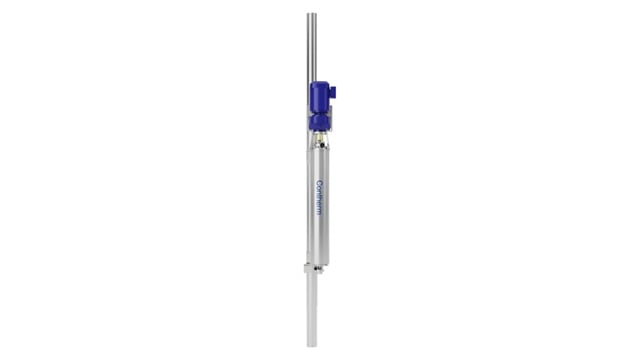
The gums removed during water degumming can subsequently be dried and processed into lecithin, a valuable co-product widely used in food and industrial applications. Technologies which use components like Alfa Laval's Contherm heat exchangers and Convap evaporators ensure final quality of dried gums.
Meanwhile, non-hydratable gums can be removed using acids, which convert these phospholipids into separable forms while also helping remove trace metals by making them form insoluble complexes.
Alternatively, both hydratable and non-hydratable gums can be removed through enzymatic degumming. Alfa Laval can provide an enzymatic degumming process that focuses on increasing the oil yield and reducing utilities consumption and byproducts.
An additional advantage is the operational flexibility to switch back to conventional water degumming when market conditions make lecithin recovery more attractive. As lecithin is a valuable co-product used in food, pharmaceutical and dietary supplement applications, this flexibility can provide important commercial benefits.
Neutralization
The neutralization stage involves the removal of free fatty acids (FFAs) from the oil, helping to improve product quality and prepare the oil for subsequent refining steps.
Elevated FFA levels are often associated with lower-quality raw materials or unsuitable storage conditions and can make refining more challenging while increasing oil losses.
A widely used solution is chemical neutralization with caustic soda. During this process, the oil is mixed with the alkali, which reacts with the free fatty acids to form soapstock. Disc stack centrifuges are then used to separate the soapstock from the oil. Following neutralization, the oil is washed, and the wash water is removed by centrifugation before the oil is dried under vacuum.
Alfa Laval offers two neutralization concepts. For crude canola and soybean oil, the 'Long Mix' process provides extended contact time in specially designed retention mixers. Disc stack centrifuges then remove the resulting soapstock and wash water, typically in a single washing stage. The separated soapstock can subsequently be processed to recover fatty acids for a variety of downstream applications.
The alternative' Multi Mix' process uses shorter contact times and can be configured with either one or two washing stages, making it suitable for refining a wide range of oils.
Both approaches are designed to support efficient refining by reducing operating costs, maintaining consistent product quality and maximizing oil yield.
Certain oils, including sunflower and corn oils, typically undergo a dewaxing step to remove naturally occurring waxes that can cause haze or cloudiness at low temperatures. This helps achieve the required cold stability and maintain product clarity during storage and distribution. Alfa Laval offers dedicated solutions for this application, including its Multi Wax and Combi Wax systems.
Bleaching
Following the neutralization comes bleaching, a critical refining step in which the oil is treated with bleaching agents, that absorb colour pigments and other impurities affecting product quality, stability and safety. During the process, the bleaching agents bind to contaminants such as carotenoids, chlorophyll and trace metals, which are subsequently removed through filtration.
Alfa Laval's advanced oil bleaching systems are available in dry, wet and two-stage configurations and are designed to deliver oils with high clarity, extended shelf life, and consistent quality. Drawing on extensive edible-oil refining expertise and a broad portfolio of proven technologies, Alfa Laval can engineer tailored bleaching solutions incorporating feed and dosing systems, bleaching reactors, filtration equipment and plate heat exchangers for efficient heating and cooling of the oil before and after treatment.
For larger-scale canola oil refining operations, hybrid two-stage bleaching systems combined with two-stage filtration can provide an effective balance between oil quality and operating cost, while helping to reduce bleaching earth consumption. Two-stage bleaching removes impurities more thoroughly by combining wet and dry bleaching methods with highly efficient filtration. The adsorbents, highly porous materials used to capture and retain impurities, are dosed between each treatment stage, allowing adsorption to continue throughout the process until equilibrium is reached and improving contaminant removal efficiency.
The filtration section can be configured with alternating filters operating in sequence to maximize throughput and utilization, with the most heavily loaded filter serving as a prefiltration stage for the incoming oil.
Deodorization
Deodorization takes place under high vacuum and is designed to remove unwanted volatile compounds while also reducing contaminants such as glycidyl esters (GEs), polyaromatic hydrocarbons(PAHs) and pesticide residues.
In the deodorization stage, prior to heating, air is removed under vacuum to prevent oxidation. The oil is then preheated in an economizer heat exchanger before a final heater, which raises it to the precise deodorization temperature, typically between 220°C and 260°C, using high-pressure steam.
The heated oil enters the deodorization column, which generally includes stripping and a retention section. In the stripping section, steam passes gently through the oil under vacuum, removing compounds that are more volatile than the oil itself. A subsequent post-stripping stage helps eliminate residual volatile substances and further improve oil quality.
By removing those compounds, deodorization improves taste, odour, stability, and shelf life while helping producers comply with food-quality standards. Alfa Laval's patented thin-film technology is designed to achieve this efficiently while reducing energy consumption and processing temperatures.
The stripped volatiles are condensed and collected as deodorizer distillate, enabling the recovery of valuable components such as tocopherols and sterols for further commercial use.
The refined oil is then ready for consumption, inclusion in food or cosmetic products, or transesterification, where it undergoes a whole new chemical process to produce biofuels.
Operational solutions for high-volume production
The production of canola and other vegetable oils involves a range of processing technologies and operational considerations.
Regardless of the feedstock, each refining stage presents opportunities to improve efficiency, product quality, yield and sustainability.
Alfa Laval combines extensive engineering expertise with decades of edible oil processing quality experience to help producers optimize performance throughout the refining process. Whether degumming, neutralizing, bleaching, dewaxing or deodorizing, Alfa Laval offers a comprehensive portfolio of process equipment and solutions designed to improve operational efficiency, maximize resource utilization and support consistent production.
Beyond standard solutions and equipment supply, Alfa Laval works closely with customers as a long-term technology partner, helping them address evolving operational requirements and develop solutions tailored to the specific challenges of modern edible oil production.