
Oil Plus decanters deliver next-gen solution as Spanish cooperative turbo-boosts capacity and quality
The rising popularity of olive oil is driving Mediterranean producers to step up operations to meet the growing demand, and for one Spanish cooperative, the urgent challenge to increase capacity without sacrificing yield, quality and sustainability, or expanding their physical footprint, has been delivered thanks to Alfa Laval’s advanced decanter technology.
DATE 2026-11-12
For an industry that has traditionally been set in its ways, times are changing, and only those that move quickly will succeed in the increasingly competitive olive oil market. The Cooperativa Nuestra Señora de Perales was determined to do just that when they approached Alfa Laval to find a solution to their need to significantly boost their processing capacity in an extremely limited space.
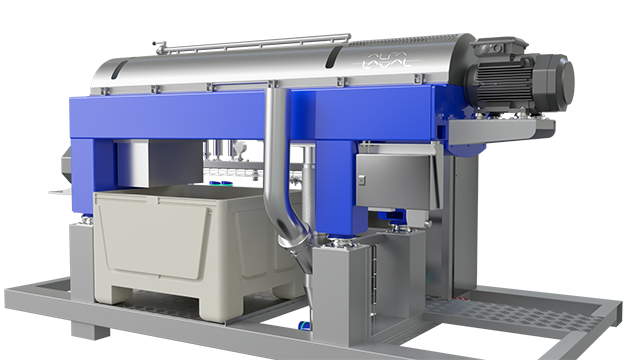
In just five years, the partnership has been transformative and the recent installation of a prototype Oil Plus conveyor to work in one of Alfa Laval’s installed Foodec 65 Sigma decanters has delivered a 30% increase in capacity, which was achieved with an improved quality in the final oil and, remarkably, with no increase in electrical or water consumption.
That success story has led to the installation of two more Foodec Oil Plus decanters, and the Cooperativa Perales is now operating at a capacity it couldn’t have imagined when it began life almost 10 years ago - increasing production more than ten-fold from 4,000 to 43,000 tonnes - and establishing itself as the largest olive oil facility in the entire region.
Right solution at the right time
Rafael Ayuso, global sales and specialist in oil separation at Alfa Laval, says: “The olive oil industry is having a second revolution, moving from traditional culture to super-intensive growing.
“That change poses us a big challenge and working with the Cooperativa Perales we offered to test our Oil Plus prototype with them, which is designed specifically to increase decanter capacity in olive oil processing. The customer has been super satisfied with the results – shown by the fact they have bought two more!”
It is the right solution at the right time. With new markets opening up, especially in Asia, USA and Northern Europe, and a general consumer shift towards healthier, nutritious food, olive oil is enjoying a boom time, and producers are rushing to keep pace, with increased need for higher capacity equipment, often operating in limited spaces.
The groves themselves are farming smaller trees so more can be fitted into the same area, and much of the land that was once used as vineyards or for tomato growing is now being given up to olives.
These expanded harvests then head for facilities which generally have little scope for expansion and run four or five processing lines. If the capacity at the processing facility does not match the rate at which olives are being produced, then the harvest and storage period is likely to be longer – from two months up to three, say – and this then impacts on quality as many of the olives are not at their freshest when processed.
“This new paradigm presented both a technological and commercial challenge, which Alfa Laval has addressed by developing high- and ultra-high-capacity equipment that has proven successful in both first and second extraction processes, “ says Rafael. “And as demand continues to grow, we have rapidly developed technological improvements to reach even higher capacities without increasing the equipment footprint or physical space requirements.”
Alfa Laval’s experience and knowledge across the edible oils and wider food industries means it is ideally positioned to support producers to make this major transition as an expert partner.
Innovation driven by customer needs
The Cooperativa Perales represents a textbook example of this transition in action. Launching in 2017 with a new facility designed to process 4,000 tonnes a year, it quickly saw an increase in members and capacity requirement, but with no scope to expand its facilities, so turned to Alfa Laval for the first time in 2021.
Alfa Laval’s Spanish team of specialists proposed the Sigma decanter technology, specifically one Foodec 65 Sigma unit, which was installed in time to accommodate the 21/22 season.
Such was its performance that another was installed the following year and with demand continuing to escalate, Alfa Laval offered the prototype of the new Oil Plus conveyor in 2024, which then took the olive oil processing game to a whole new level.
Oil Plus’ improved conveyor design helps to efficiently and continually separate the oil, which sees the lighter oil rise to the top while the heavier solids are drawn to the bowl's inner wall. The operation is remarkably effective and straightforward, and this range of decanters can be easily cleaned using flushing/CIP programs.
Achieving a 30% increase in capacity without increasing the installed electrical power, effectively means that the kWh consumed per tonne processed has decreased by a third, while each decanter also consumes the same amount of water as before, while processing 30% more product, a significant proportional saving. It is estimated that each decanter uses just 3–4 m3 per day for cleaning purposes.
“We have a split portfolio, so we still have the Sigma decanter range for smaller producers but are now offering the Oil Plus more and more as word spreads,” says Rafael. “With our experience and global presence, we had the agility and the ability to be right to the front when it came to finding solutions as the olive oil culture and production model changed quickly around the Mediterranean.
“We are delighted we have been able to step forward for customers like Cooperativa Perales, who urgently needed to transform their operations, but needed an expert partner to join them on that journey.”
Tags
All