The future of food processing: how sustainable technologies are transforming the industry
With the global population set to grow beyond 10 billion people by 2050, and the UN estimating that 70% more food will be needed to feed them, sustainable technologies in food processing are not just a nice-to-have – they are an absolute necessity.
Especially so since the world’s energy and water resources are already being stretched to their limits, while global greenhouse gas (GHG) emissions continue to impact climate change, which in turn negatively affects the regularity and certainty of crop supply and the raising of livestock.
For food products and processing systems, that means efficiency and sustainability are absolutely key, and in recent years, technologies have advanced to meet the uncompromising demand to make more from less.
With food systems contributing to a third of global greenhouse gas (GHG) emissions, while also impacting ecosystems, land, and water resources, the food processing solution is not found in a single big idea but rather a series of improvements, which when taken as a whole, show an industry in transformation.
Accelerating sustainable technologies in both conventional and next-generation food processing is at the heart of this, with the imperative to cut waste and CO2 emissions while saving on water and energy in order to secure a safe food supply for the planet into the future.
When it comes to conventional processing, approximately one-third of all food is lost between farm and fork. That is not good enough, and Alfa Laval is at the forefront in developing technologies that upcycle by-products that would have been previously considered waste into food suitable for human or animal consumption.
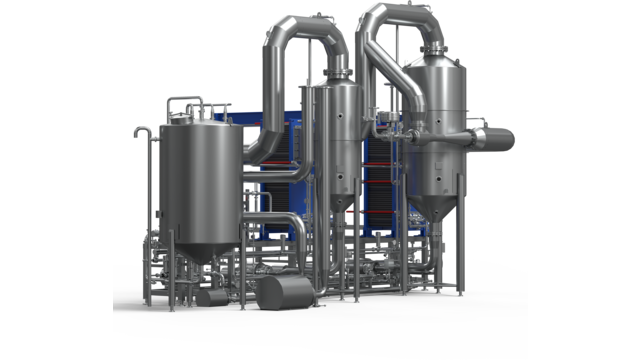
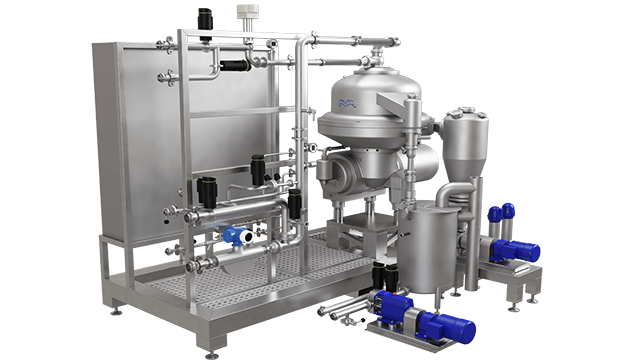
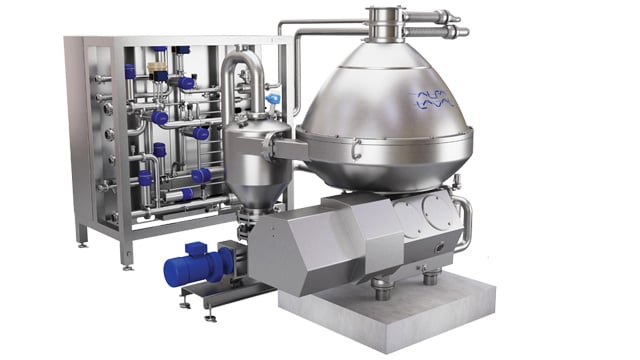
Technologies such as the SANX decanter range, AFPX disk-stack centrifuges, and AlfaVap evaporation systems are all geared towards achieving a level of processing that is transformative for producers when it comes to saving on waste management costs and creating new revenue streams through the byproducts.
Meanwhile, with so many water-stressed areas in the world, food processing that protects this most precious of resources is fundamental, and it is here that much of the new technology is focused on making a difference.
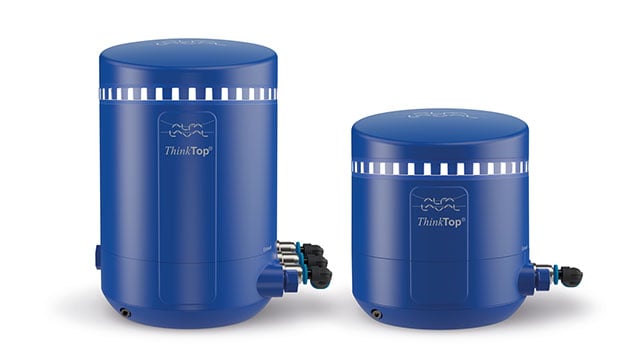
Alfa Laval’s solutions in this area are targeted at creating systems with embedded circularity so that water is treated and reused. When it comes to cleaning in place, the ThinkTop system is unrivalled, cutting water consumption by up to 90%, whilst reducing contamination risks by confirming the cleaning.
However, it is perhaps through the emergence and development of next-generation food that the biggest changes in the overall landscape of food production and processing will be seen.
Extracting protein from non-traditional sources while minimizing resources still provides significant development potential, but its positive impacts will be seen more and more. Next-generation food covers a range of products, produced in different ways, such as fermentation-derived foodstuffs, new sources of plant-based protein products, cultivated meat, and even insects.
Removing the need for rearing livestock would reduce the food production emission footprint by 90% (UNEP, 2023), and while that day may be far off and indeed unwanted by many consumers, developing these alternatives will have a growing effect in changing the environmental impact of the industry.
Alfa Laval is supporting new ways of applying biomass and precision fermentation processes with its world-class technologies in separation, heat transfer and fluid handling, providing the ideal launchpad from which to develop more technology and systems that can transform the stability and sustainability of food production.
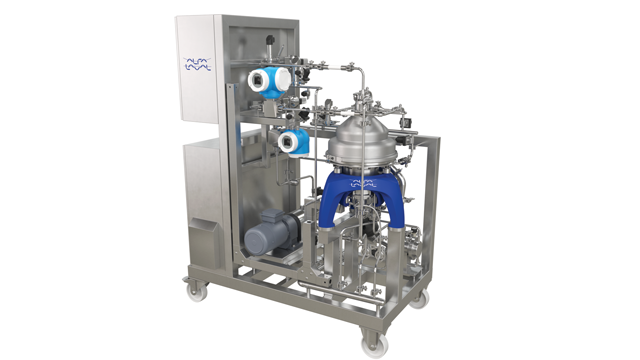
Technology such as the MB20 pilot unit and the PureFerm high-speed separator range, offering fully hermetic operation and energy consumption reductions of up to 40% that will help open the door to a secure, sustainable food future.
In this age of climate change and geopolitical unrest, achieving certainty and control over food production is vital, and this can be achieved by transforming traditional food processing systems.
Like many industries, the level of change can sometimes be breathtaking, but nowhere are the stakes higher than here, and Alfa Laval is at the heart of the transformation and primed and ready to offer more support to deliver the technologies and expertise required.