Optimizing food & beverage operations: improving efficiency, productivity, and process performance
Trying to get more for less is an increasingly testing challenge for consumers around the globe as geopolitical turbulence and rising fuel prices create inflation at the shopping till.
It also remains a key issue for food and beverage producers worldwide as they look to operate profitably and sustainably while keeping a growing global population fed and watered.
Thankfully, for those producers, they have more agency and control over their challenge than the average consumer, as they can make the decisions to partner with the right people and deploy the latest technology and equipment that will optimize their operations.
With the UN estimating that 70% more food will be needed by 2050, delivering this technology and continuing to innovate and be flexible to meet evolving demands is absolutely key.
That puts process experts Alfa Laval at the heart of this generational challenge, where there really is no room for failure – the race is on to produce more food from fewer raw materials and with less impact on the environment.
All of this while consumers are becoming more demanding and sophisticated in their tastes, so it is essential that processing techniques do not negatively impact flavours and aromas.
Covering multiple products from coffee, baby food, soups and dressings, the breadth of the food and beverage industry means that it uses many different kinds of processing technologies, which sit right in the wheelhouse of an experienced world-class operator like Alfa Laval.
More for less
With a portfolio of sector-leading equipment, including heat exchangers, separators, decanters, evaporators, pumps and control systems, Alfa Laval is driven to support its customers in continually pushing the boundaries to see how they can make more for less.
A prime example comes in the world of citrus fruit processing, which highlights what a difference the best equipment can make. Here, climate change and crop diseases are impacting the predictability of harvests, driving up raw material costs, while water scarcity is an increasing issue.
For the producer battling in this environment, being able to rely on optimized processing is an absolute godsend – offering one less thing to worry about.
In fact, what Alfa Laval is supplying in this area is not only efficiency in the processing, with maximum product squeezed from the raw material with minimized energy and water use, but also the potential for another lucrative revenue stream.
Equipment such as the CR series, a disc stack separation system, can process the oil from the peel of the fruit – the pith, skin and zest – to produce citrus oil, a valuable commodity used in flavouring, and in the cosmetic industry.
Not only that, the oil produced is of high quality, with a concentration in the first stage of extraction of more than 65%, and an oil loss in the heavy phase of less than 0.1%. Because of the hermetic design, the oxygen pick-up is minimized, which enhances the aroma, taste and shelf-life of the product.
So effective is the processing that the payback can be between two and six months, highlighting the impressive efficiency of the Alfa Laval technology, which is also highly scalable.
And all the while, Alfa Laval technology, such as that found in the CR series, is designed to use the least amount of energy possible. In harness with Alfa Laval eMotion, a unique energy-saving module, available as an add-on for many of Alfa Laval’s separators, it can actually save up to 75% in consumption, while the easy-to-clean design ensures water can be saved in the cleaning in place (CIP) phase, adding sustainability to the profitability.
Real-world solutions
This is Alfa Laval food and beverage processing efficiency in a nutshell. Offering real-world solutions that can be easily implemented to enhance yield and minimize waste, making processing more profitable when times are tough.
This is a story told across the food and beverage sectors, as Alfa Laval continues to work closely with customers and partners to develop and implement innovations to optimize production processes.
With soups and sauces, FrontLine is a top of the range series of plate heat exchangers which handle heat-sensitive, high-viscosity products with unrivalled gentleness in product handling to ensure quality, while saving energy and water through long running times and continuous production.
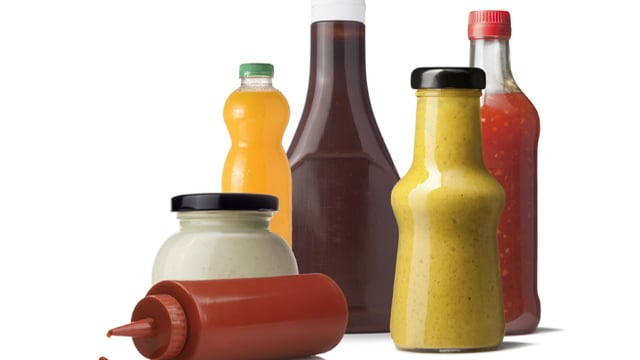
Meanwhile, the Alfa Laval Hybrid Powder Mixer delivers gentle and effective mixing for dressings and condiments, part of a wide range of mixing, agitation, and blending equipment, including the Rotary Jet Mixer, with which it is often paired.
Tomato-based processing is a significant sector across the world, and is set to take off in India, but the high acidity and salinity take a heavy toll on equipment, so it needs to be expertly designed. Step forward, Alfa Laval’s Unique SSV Long Stroke Valve, which ensures minimal pressure drop and mechanical shear.
Soy-based products also put high demands on equipment, especially tanks, as soy-mix is aged for long periods, leading to a build-up of residues. Alfa Laval’s tank-cleaning machines perform an efficient, high-impact cleaning pattern that removes all residues and is quicker than traditional equipment and less water-intensive.
Cleanability is also crucial with baby foods, and here Alfa Laval’s unique Mixproof valves provide outstanding hygiene. The SeatClean and HighClean versions have additional cleaning capabilities for solids and sticky products, respectively, and the Alfa Laval Rotacheck+ is a monitoring device that offers an intelligent validation of tank cleaning results.
High fouling and viscous applications, like fruit or vegetables puree pasteurization or prepared sauces heating and cooling, can benefit from a significantly longer production uptime thanks to the Alfa Laval Contherm® Scraped Surface Heat Exchangers.
Such cutting-edge technology not only preserves the original nutrients, taste and flavours of the raw material, it can also remarkably reduce the frequency and the lengths of the CIP cycles, thereby reducing consumption of water, energy and chemicals all along with a higher yield from the process line.
Foundations for innovation
These few examples of processing solutions across the food and beverage world highlight the scale and variety of the challenge faced in optimizing operations, which can only be met by experienced partners with decades of expertise and knowledge.
It is on these foundations that Alfa Laval builds its innovations and agile thinking, which are a perfect match for producers looking to meet recent shifts in consumer demands by adding new, healthier products to their range, while maintaining efficiency and performance.
The PurePulp series, for instance, is helping those moving into healthier next-gen drinks with a hermetic design and a precise operation. The gentle handling minimizes product loss and preserves flavours and aromas, while the design allows for cleaning-in-place and low-energy consumption.
And for producers of coconut drinks – a plant-based, clean-label, allergen-friendly and naturally hydrating alternative – innovations in high-speed separation continue to refine the production processes to maximize profits and allow for the development of new variations on the basic product.
Underpinning all of these products is Alfa Laval’s professional and partnership approach. Working closely together way beyond the purchase of the equipment is always the best way to understand the performance of the technology, refine it where necessary, and ensure that the very best solutions are found.
Alfa Laval understands that with an ever-shifting industry landscape with challenges often beyond the control of producers, there can be no compromise. The equipment must deliver the best possible efficiency; it must maximize the yield, and do both of these things while still delivering the highest quality product.
More for less – and better.