
Sonihull
Alfa Laval Sonihull is a simple and effective biofouling management solution built with ultrasonic anti-fouling technology. Without biocides or cleaning chemicals, it reduces the need for mechanical cleaning by keeping hulls and other submerged surfaces free from algae, barnacles and other organisms. By preventing increased drag and safeguarding the performance of propellers, coolers and other key equipment, Sonihull promotes energy efficiency and rapidly pays itself back through fuel savings.
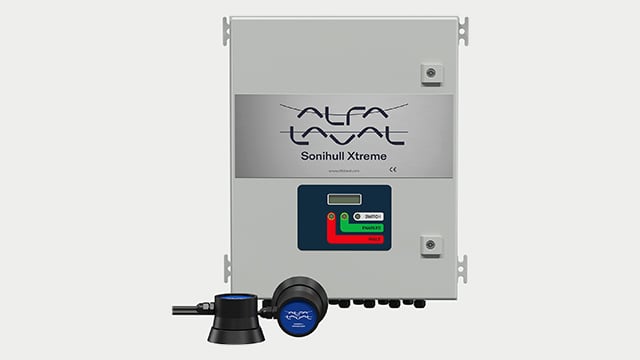
Modern biofouling management with ultrasound
- Effective prevention of biofouling – without releasing biocides, microplastics or other harmful substances into the environment
- Significant fuel savings when applied to hull and propulsion systems
- Reduced downtime and costs through prolonged intervals between mechanical cleanings
- No disturbance to crews, vessel structures, sonar or electronic equipment
- Easy installation without dry docking – no through-hull fittings
Sonihull ultrasonic anti-fouling technology is the world’s leading chemical-free biofouling management solution. Backed up with decades of experience in the maritime industry, it has a proven track record on thousands of commercial vessels.
A smarter and easier anti-fouling solution
Sonihull combats biofouling without potentially harmful substances, major equipment or manual labour. It safeguards efficiency and extends the time between mechanical cleanings. So its impact on your vessel is measured in fuel, time and money saved.
A smarter and easier anti-fouling solution
Sonihull combats biofouling without potentially harmful substances, major equipment or manual labour. It safeguards efficiency and extends the time between mechanical cleanings. So its impact on your vessel is measured in fuel, time and money saved.
A barrier to invasive species
Besides protecting uptime and energy efficiency, Sonihull’s ultrasonic anti-fouling technology helps preserve aquatic ecosystems. By keeping organisms from attaching to the hull, sea chest and more, and it prevents them from being transported to new ecosystems. This reduces the risk of spreading invasive species.
No disturbance to other systems
Inaudible to vessel crews, Sonihull is also the preferred choice to minimize disturbance to instrumentation and other electronics. Thanks to its low level of electromagnetic interference (EMI) noise, it has no impact on sonar or other vessel systems.
Easy installation on any vessel
Sonihull involves no through-hull penetrations, which means no dry docking is needed for installation. From marine-grade aluminium and stainless steel mounting rings to a wide range of adapters, there are options for attaching to different surfaces and structures according to vessel requirements.
Scalable flexibility
A Sonihull system can comprise up to 16 independent transducers, which allows multiple surfaces and types of equipment to be protected with a single control unit. The transducers can connect from up to 100 m away with no loss in performance, and individual transducers or groups can act as independent systems running different ultrasonic tracks.
Low maintenance costs
Wherever Sonihull is installed, it reduces the need for cleaning-in-place (CIP) and extends the interval between mechanical cleanings – often from months to years. But the system itself is also easy and cost-effective to maintain. For example, there are no expensive impressed current anodes to replace.
How Sonihull works
Sonihull uses ultrasound to create microscopic agitation, which has a gentle but continuous effect. It keeps hulls and equipment clean by eliminating microorganisms on the surface, which removes the first link in the food chain. Without this biofilm, surfaces become less inviting for larger organisms that feed on it. Likewise, the microscopic movement of the water prevents barnacle and mussel larvae from attaching.
The agitation is caused by non-inertial cavitation, a low-energy process that produces no shockwave and no risk of surface erosion or pitting:
- Sonihull generates acoustic pulses in targeted ultrasonic frequencies, which are transmitted through the material the transducers are attached to.
- The pulses create an oscillating pattern of decreasing and increasing pressure on the material surface.
- Microscopic bubbles form as the pressure drops and implode as the pressure increases.
Biofouling, energy efficiency and CII
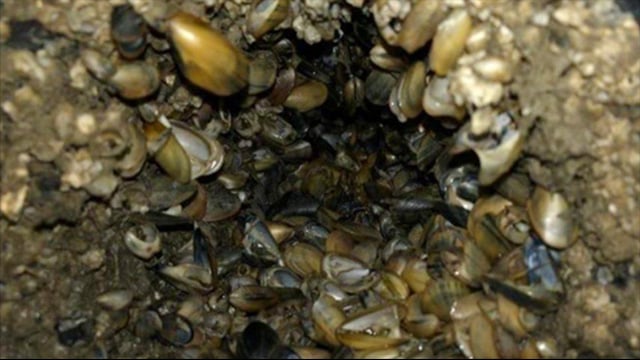
Biofouling affects vessel energy efficiency in multiple ways. When organisms accumulate on the hull, they add drag that increases fuel consumption and emissions directly. But biofouling can also form on other wetted surfaces, such as in the sea chest or within cooling systems. This decreases the performance of cooling and other processes, causing further energy losses – and possibly loss of uptime.
Sonihull combats biofouling on all submerged surfaces. It optimizes hydrodynamics when installed on the hull and propeller, but it also saves energy in many engine-related systems. This makes it an effective way to reduce fuel consumption and improve Carbon Intensity Indicator (CII) ratings.
Sonihull anti-fouling applications
Sonihull ultrasonic anti-fouling systems can be used in a wide range of applications, both outside and inside your vessel. Wherever you use Sonihull, you can count on fast payback through savings in fuel costs and maintenance.
Hull
Sonihull prevents bioaccumulation on the hull, which reduces reliance on coatings and the need for mechanical cleaning. By extending hull cleaning intervals, it means lower maintenance costs and less vessel downtime. Above all, it protects hydrodynamic efficiency when applied to the full hull, leading to significant fuel savings and contributing to an improved Carbon Intensity Indicator (CII) rating.
Propulsion systems
Sonihull protects propellers, thrusters and waterjets without the use of biocides. It can eliminate propeller coatings, and it extends propeller cleaning intervals from months up to years. Compared to an uncleaned propeller over a five-year period, a propeller with Sonihull can provide up to 3% fuel savings (Source: Glofouling GEF-UNDP-IMO, 2022). This means quick payback and contributes to an improved Carbon Intensity Indicator (CII) rating.
Sea chests
By keeping sea chests clean, Sonihull protects the efficiency of connected cooling systems and safeguards the environment. Without resorting to biocides, it reduces the need for cleaning-in-place (CIP) maintenance while minimizing the risk of transporting potentially invasive species. With no expensive anodes to replace, Sonihull also saves CAPEX and OPEX compared to impressed-current technology.
Strainers and pipework
Sonihull maintains optimal performance in critical engine cooling water systems, supporting reliable and efficient operations. Strainers and pipework can be kept clean with minimal maintenance and no chemical or mechanical cleaning. Besides protecting engine uptime, this keeps potentially invasive species from accumulating in hard-to-reach areas.
Coolers and freshwater generators
Box coolers, plate coolers, shell-and-tube coolers and freshwater generators based on similar technologies can all benefit from Sonihull, which prolongs their maintenance intervals and keeps their efficiency high. The need for chemical or mechanical cleaning is minimized, which promotes more reliable and cost-effective operations.
Alfa Laval Marine Service
Worldwide and 24/7, Alfa Laval Marine Service is your path to greater uptime, optimized performance and true peace of mind. Our network is always on call, and our service offering brings reliability, efficiency and compliance throughout your equipment's lifetime.
24/7 Service & Support
Contact us anywhere, anytime:
+46 4636 7700
marine.service@alfalaval.com
Our global network of service centres centres, distribution centres and field service engineers is always ready at assist you.