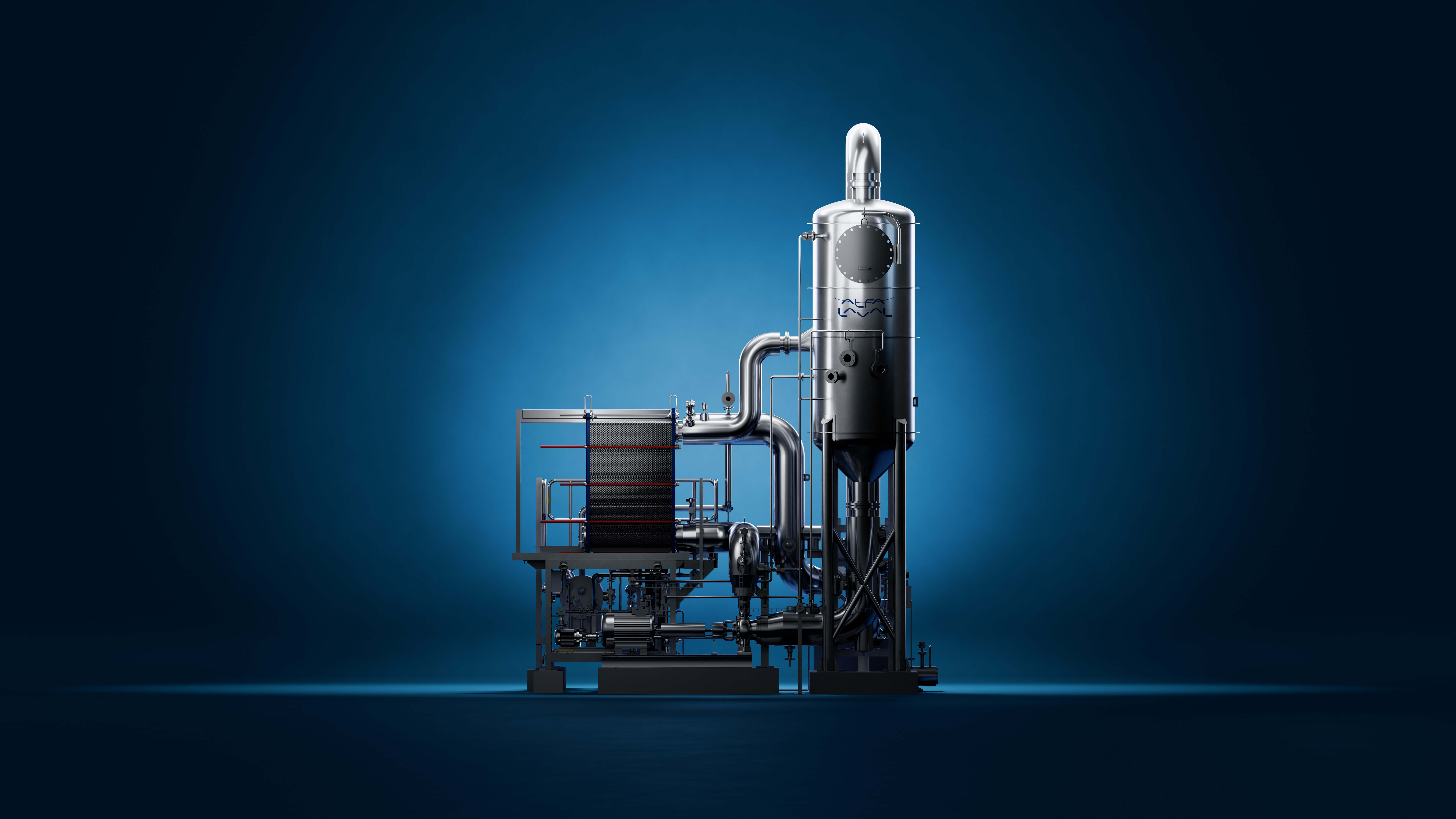
Spent caustic recovery: reducing waste, costs, and chemical consumption
Spent caustic is a highly alkaline, contaminated wastewater from various industries. Its treatment is costly and complex due to high pH and pollutants. Recovering and re-concentrating spent caustic with Alfa Laval systems reduces chemical use, costs, and waste, while improving sustainability and compliance, making recovery both environmentally and financially beneficial.
DATE 2026-08-20What is spent caustic?
Spent caustic is a highly alkaline, contaminated wastewater primarily composed of sodium hydroxide (NaOH) and various organic and inorganic pollutants. It is generated in several industries, such as alumina refining, graphite purification plants, and battery recycling facilities. These industries use caustic solutions at high concentrations for cleaning, extraction, or neutralization, resulting in spent caustic streams at lower concentration and often containing impurities that are difficult to treat due to their high pH and content of suspended matter.
Benefits of recovering spent caustic
Recovering spent caustic can really pay off through reduced purchase, disposal, and treatment costs. It can also help meet sustainability and regulatory requirements. Alfa Laval provides complete, compact, and energy-efficient evaporation systems for caustic recovery. Corrosion-resistant design and materials ensure a long service life and a higher level of plant reliability, based on our extensive experience supplying caustic evaporation plants to the chlor-alkali industry.
Re-concentration for cost savings
Re-concentrate your caustic solution to reduce chemical consumption and operational costs. Spent caustic is a waste caustic product generated in many industrial processes where caustic is consumed. It consists of NaOH or KOH, water, and contaminants from the process in which it is used. During operation, the caustic is consumed and becomes diluted, lowering its concentration. By re-concentrating the caustic solution with Alfa Laval technologies, you can reduce your overall chemical consumption and operational costs.
Challenges of neutralization and disposal
However, neutralization and disposal of spent caustic can be both technically challenging and costly. Due to its high pH, variable composition, and content of suspended solids, oils, organics, and dissolved contaminants, spent caustic often requires extensive treatment before it can be discharged or sent for further handling. Neutralization typically involves significant acid consumption and careful pH control, increasing operating costs and often generating large volumes of salts and sludge that must also be managed and disposed of.
Rising disposal costs and compliance risks
In many cases, disposal costs continue to rise due to stricter environmental regulations, higher transportation expenses, and the need for specialized handling of hazardous or difficult waste streams. In addition to the direct costs of chemicals, treatment, and waste management, companies may also face indirect costs related to downtime, maintenance, corrosion, and compliance risks.
Advantages of caustic recovery
By recovering and re-concentrating spent caustic instead of relying solely on neutralization and disposal, plants can reduce waste volumes, lower treatment costs, and improve overall process sustainability. This makes caustic recovery an attractive solution not only from an environmental perspective, but also from a financial and operational point of view.

Damien Vernede
Role at Alfa Laval: Global Sales and Business Development
Area of expertise: ZLD; evaporation and crystallization technologies