

The blog of Alfa Laval experts driving ZLD innovations and exploring the use of water in industries
Welcome to our blog, where Alfa Laval's team of experts share unique insights in industrial wastewater treatment and water circularity, focusing on Zero Liquid Discharge (ZLD). Our specialists work on developing and optimizing evaporation solutions for water reuse from computer simulations to pilot tests and full-scale industrial systems in close collaboration with customers around the world. We are passionate about making advanced water management solutions more efficient and accessible. Through our work, we help industries apply sustainable treatment technologies, improve resource efficiency and overcome challenges in water management. Welcome!
Read the latest posts here


Read all blog posts here
View more
The cost of throwing value away
For years, industrial wastewater has been treated as exactly that: waste. Something to process, regulate, pay for, and move out of the plant as safely as possible. It sat at the far end of operations necessary, expensive, and rarely associated with value. That view is starting to look outdated. Across industry, the pressures are piling up. Water is more constrained. Disposal is more expensive. Regulations are tighter. Sustainability targets are no longer optional. And in that environment, companies are beginning to ask a sharper question: are we sending valuable resources down the drain?
August 20, 2026
Spent caustic recovery: reducing waste, costs, and chemical consumption
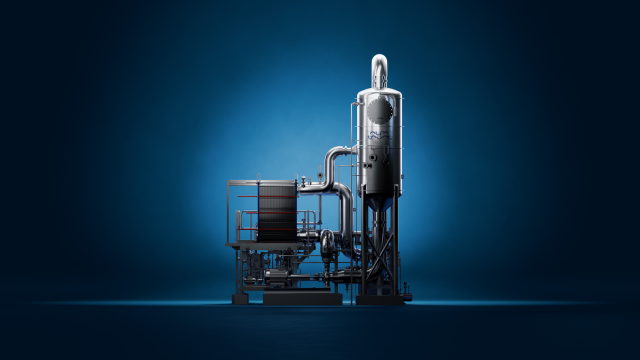
Spent caustic is a highly alkaline, contaminated wastewater from various industries. Its treatment is costly and complex due to high pH and pollutants. Recovering and re-concentrating spent caustic with Alfa Laval systems reduces chemical use, costs, and waste, while improving sustainability and compliance, making recovery both environmentally and financially beneficial.
August 20, 2026
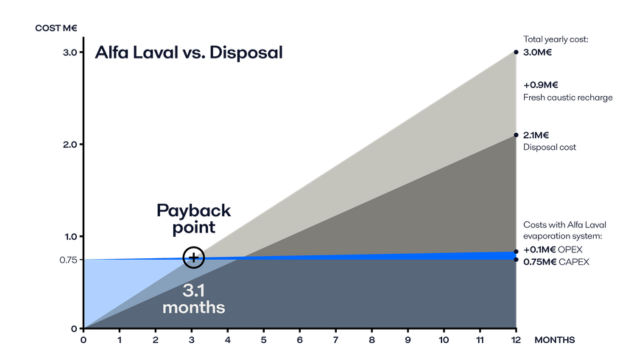
Operational case: Recovering spent caustic to cut costs and support a zero-waste ambition
Spent caustic is a highly alkaline, contaminated wastewater composed of sodium hydroxide (NaOH or KOH), water, and various organic and inorganic pollutants. It is generated in processes that use caustic for cleaning, extraction, or neutralization, resulting in lower concentration streams that often contain impurities challenging to treat due to their high pH and suspended matter. Some years ago, we partnered with an industrial plant facing precisely this challenge. The main driver behind the project was clear: support the company’s corporate target of becoming a zero-waste facility.
May 28, 2026
Welcome to the ZLD Space-Time Lab
Ever wondered what really happens when bold innovation meets the gritty reality of industrial systems? Meet Patrick—one of Alfa Laval’s ZLD experts and challengers, and a regular voice on this blog. In this opening post, Patrick sets the stage for what this blog is all about: inviting you into the messy, inspiring, and often surprising space where big ideas are tested, stretched, and transformed into real-world solutions. He also shares why he’s still captivated by Zero Liquid Discharge, despite a rocky first run, and explores how the lessons hidden in failure can often pave the way for breakthrough success. Welcome to the ZLD Space-Time Lab: where problems are respected, collaboration is key, and innovation thrives between imagination and reality.

What is Zero Liquid Discharge?
Zero Liquid Discharge (ZLD) is an innovative technology equipped to minimize industrial water waste. It enables a circular flow of water, allowing it to be reused multiple times within the same process. The benefits of using a Zero Liquid Discharge system include reduced water pollution, as it prevents harmful pollutants from being discharged into natural water bodies. It also reduces waste volume, minimizing the amount of waste that needs to be managed and disposed of. Additionally, ZLD systems lower fresh water intake by recycling and reusing wastewater, leading to significant cost savings over time. Furthermore, these systems allow for the recovery of valuable by-products from wastewater, which can be reused or sold.
Subscribe to our Wastewater Newsletter
Sign up to receive monthly insights from across the water and wastewater industry, delivered straight to your inbox.