OLMI Secondary and Tertiary Quench Exchanger
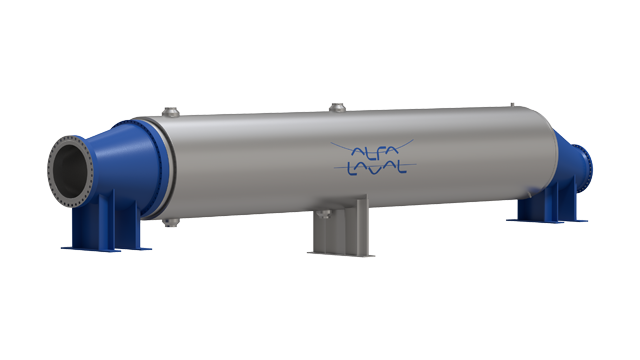
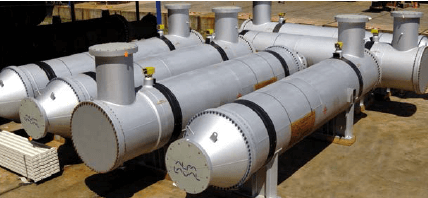
Reliable and efficient, Olmi secondary and tertiary quench exchangers cool gaseous cracked effluent from the primary quench exchanger while generating saturated steam or heating-up boiler feed water. As a trusted equipment and service provider to the ethylene industry, Alfa Laval optimizes quench exchangers along with ancillary items, such as steam drums and piping, for continuous uptime and maximum ethylene productivity and yield.
Optimized performance and reliability for quench applications
- High operational reliability and long service life
- Improved energy recovery and increased process yield
- Reduced thermal stress for enhanced durability
- Lower maintenance requirements through optimized design
- Flexible solutions adapted to different operating conditions
Based on proven design principles, Alfa Laval Olmi secondary and tertiary quench exchangers are engineered to handle demanding process conditions with stable and efficient operation. The optimized tubesheet design reduces thermal stress and improves durability, while advanced materials and manufacturing ensure long service life.
At the same time, the solution supports improved energy recovery and higher yield, contributing to overall process efficiency and productivity. Flexible configurations allow adaptation to a wide range of operating conditions and system requirements.
Optimizing secondary and tertiary quench processes for ethylene production
Alfa Laval can supply complete quench systems constituted of primary, secondary, tertiary quench exchangers and steam drums. Alfa Laval Olmi secondary and tertiary quench exchangers (SQEs and TQEs) are mainly based on the same proven and reliable design concepts of Olmi S&T primary quench exchangers.
Superior technology, unmatched quality, durable materials and advanced welding enable these shell-and-tube heat exchangers to provide unequalled operational reliability. This contributes to improved energy recovery and steam generation as well as increased productivity and yield.
Versatile, thin and flexible tubesheet design
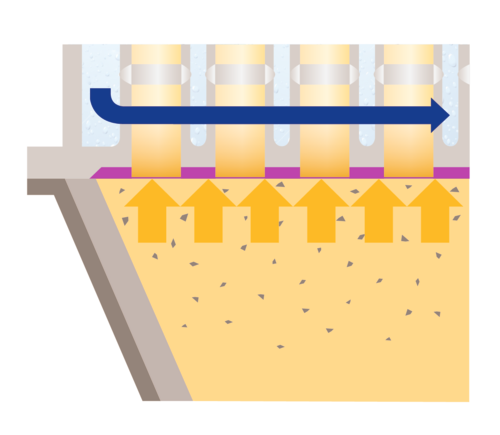
To handle process demands, Olmi secondary quench exchangers feature thin and flexible tubesheets for
low operating metal temperatures and flexibility. As a result, tubesheet is efficiently cooled and local thermal-mechanical stresses across tubesheet thickness are greatly reduced. Also thermal differential elongation stresses between hot tubes and cold shell are efficiently absorbed.
When required, an anti-erosion weld overlay in high-nichel alloy is used to protect the hot tubesheet. Tubesheets, flexible knuckles and tube joint hubs are made from single forging, which guarantees high quality. Tubes are welded to hot and cold tubesheets using internal bore welds and crevice-free welds, respectively.
Depending on operating conditions, a special layout for water distribution and steam collection may also be applied.
Depending on the operating conditions and dimensions, Olmi tertiary quench exchangers can be designed either with thin and flexible tubesheets like the secondary quenchers, or with thick standard tubesheets.
Durable design
Differential thermal expansion between tubes and shell is dramatically reduced due to highly efficient cooling of hot parts and smart design adopted. The thin tubesheet is sufficiently flexible to eliminate possible problems with fatigue and cracks.
Exceptional materials
Olmi secondary and tertiary quench exchangers are available in a wide range of materials – from carbon and stainless steels to special alloys. To maximize your equipment service life and minimize maintenance requirements, Alfa Laval engineers can advise you on the most appropriate materials to use based on your specific operating conditions.
How it works
Secondary and tertiary quench exchangers cool process streams to support efficient heat recovery and stable operation in downstream stages of the cracking process. By maintaining controlled temperatures and effective heat transfer, the system helps reduce thermal stress and improve overall process performance.
The optimized design ensures reliable operation under varying conditions, while supporting efficient steam generation and integration with the overall quench system.