
Ziepack
Alfa Laval Ziepack is a fully welded hybrid plate-and-shell heat exchanger built to perform where conventional solutions fail to deliver low pressure drop. Trusted across petrochemical, refining, and power industries, it excels for large duties in vacuum condensation, reboiling and gas heating, delivering compact and reliable performance exactly where it’s needed most.
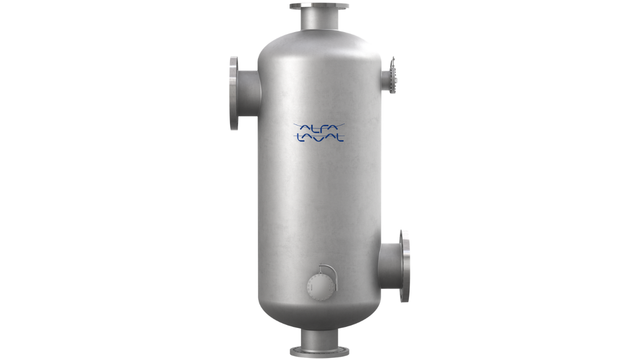
Ziepack units feature laser-welded plates and hydroformed channels, engineered for maximum efficiency in a compact design
- Exceptional heat transfer: The corrugated plate technology maximizes thermal efficiency for condensation, reboiling, and gas heating.
- Ultra-low pressure drop: Customised design ensures minimal pressure loss, ideal for vacuum and demanding low pressure drop processes.
- Compact footprint: Space-saving installation fits tight layouts and revamps. From 2 MW up to 50 MW in one single unit!
- Fast return on investment: Lower utility costs and maintenance needs deliver rapid payback.
Each Ziepack unit is custom-engineered to comply with your thermal, mechanical, and pressure vessel code requirements. This allows units to be built to fit within existing columns or even to be installed directly in a duct, streamlining revamps without structural rework. Full shell-side access further enables mechanical inspection and cleaning, ensuring long-term operational reliability.
How it works
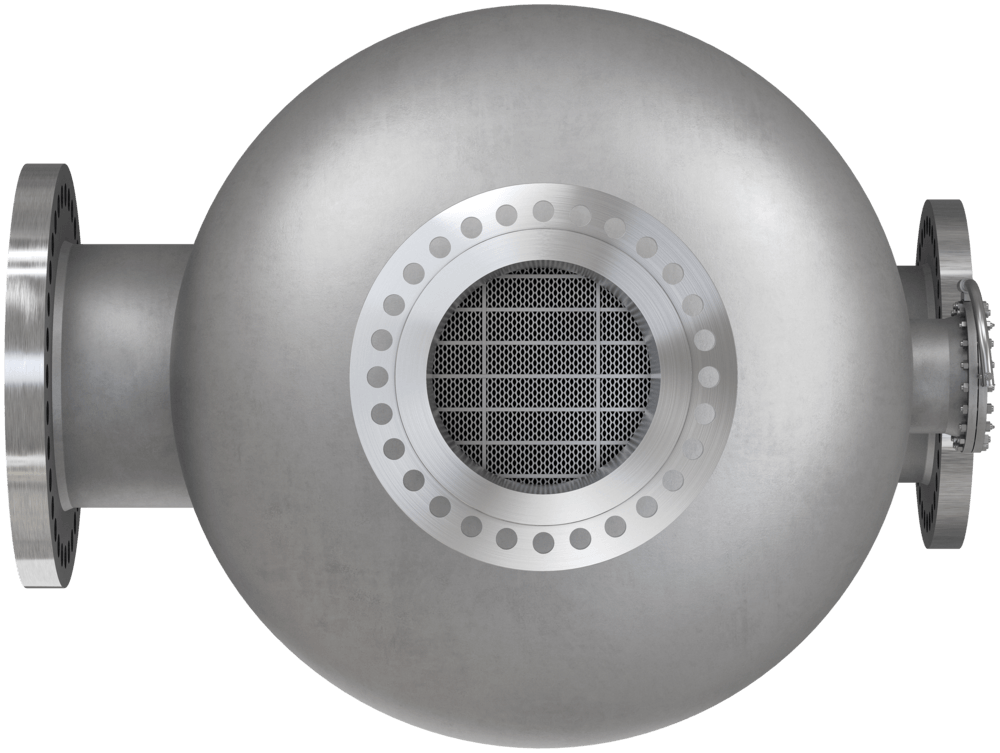
Ziepack heat exchangers combine a hybrid design, featuring a corrugated plate pattern on the hot side and a tube pattern on the cold side. This unique combination enables high heat transfer (up to 50 MW) in a single unit, with minimal pressure drop, making Ziepack ideal for condensing services with restricted pressure drop and gas applications.
The Ziepack plates can be manufactured in different metallurgy such as SS304, SS316, 904L, 254 SMO or duplex. Horizontal or vertical configurations are available, including column-integrated options, to match your process needs.
Insights and case stories
FCC Unit (Refinery)
Facing $25 million in annual losses caused by inefficient cooler performance, an Asian refinery replaced 52 units with just 4 Ziepack exchangers featuring SS904L plates. The result: stable thermal and hydraulic performance year-round. Corrosion issues were eliminated thanks to the upgraded plate material.
Phenol unit (Petrochemical plant)
A phenol producer needed efficient condensation for a flash and a pre-flash column. A single Ziepack unit delivered a 38 MW duty with only 7 mbar pressure drop, replacing two large shell-and-tube exchangers.
Carbon capture (Power plant)
A European power plant installed two Ziepack heat exchangers in a biogenic carbon capture unit to recover 23 MW from hot flue gas and transfer it to the cold flue gas prior to an ejector, all with just 100 mbar pressure drop. This solution helps cut electricity consumption and supports sustainable operations.
Frequently asked questions
1. What is a welded hybrid plate-and-shell heat exchanger?
A welded hybrid plate-and-shell heat exchanger combines the high efficiency of a corrugated plate on one side with a tube pattern on the other side. This design combines high thermal efficiency with low pressure drop and robustness. Laser-welded plates are enclosed in a pressure shell, allowing the unit to handle high pressures, extreme temperatures, and aggressive media while maintaining superior thermal performance.
2. What industries use Ziepack heat exchangers?
Ziepack is used in petrochemical, refining, and power generation industries—particularly in services where low pressure drop is required. Its compact design makes it ideal for any process requiring efficient condensation, reboiling, or gas heating.
3. Why does Ziepack have a lower pressure drop than traditional condensers?
Ziepack’s design uses optimized flow channels and hydroformed plates with customized gaps to balance thermal and hydraulic performance. This results in a significantly lower pressure drop compared to air coolers or shell-and-tube exchangers, which is especially critical for vacuum column or gas-to-gas applications where maintaining low pressure is essential.
4. Can Ziepack be integrated directly into a distillation column?
Yes. Ziepack offers a column-integrated configuration, allowing the heat exchanger to be installed directly at the top of a distillation column. This eliminates the need for external piping, reduces footprint, and simplifies retrofit projects in space-constrained refineries.
5. How does Ziepack help reduce energy and water consumption?
By replacing multiple air-cooled condensers or shell-and-tube units with a single high-efficiency Ziepack exchanger, plants can significantly cut electricity usage (from fans/pumps) and water consumption. This not only lowers operating costs but also supports sustainability targets and reduces the plant’s environmental footprint.