
Diffusion welded plate-and-fin heat exchangers
Diffusion welded plate-and-fin heat exchangers represent a new and unique type of heat exchanger. Designed for cyclic, large-scale gas-to-gas and gas-to-liquid duties, these compact units deliver exceptional heat transfer efficiency, low pressure drop and outstanding operational reliability in positions with high pressures and temperatures. Contact us to learn more about how this next-generation technology can add value to your thermal processes.

Benefits
- Outstanding reliability under cyclic operation at pressures up to 200 bar (2,900 psi) and temperatures up to 540°C (1,000°F)
- Exceptional thermal efficiency with very low approach temperatures and even crossing temperatures
- Fully customizable for highly asymmetric gas-to-gas and gas-to-liquid duties
- Very low pressure drop without compromising thermal performance
- High capacity in a very compact footprint thanks to extremely high surface-to-volume ratio

Unique features
SuperFin
Unique geometry for maximum efficiency and reliability in gas applications
The SuperFin design provides an extremely high surface-to-volume ratio, maximizing heat transfer in a highly compact unit. It also minimizes pressure drop and delivers exceptional structural strength and flexibility, making it ideal for cyclic gas applications involving high pressures and temperatures.
SigmaCore
High-strength materials for robust performance
Leveraging high-performance materials like stainless steel ensures exceptional strength, corrosion resistance, and structural integrity under high pressures and temperatures, enabling reliable, trouble-free operation in demanding duties.
VariFlow
Optimized for asymmetric flows
VariFlow enables full flexibility in handling asymmetric flows in gas-to-gas, gas-to-liquid, and liquid-to-liquid duties. This allows heat exchangers to be precisely optimized for applications with large flow imbalances, maximizing efficiency and performance without oversizing, or compromising pressure drop.
OptiBond
Diffusion welded for maximum reliability under tough conditions
OptiBond is an advanced diffusion welding technique that creates a fully bonded, high-strength core. This ensures superior durability and long-term operational reliability in demanding applications involving extreme temperatures, high pressures, and cyclic operation.
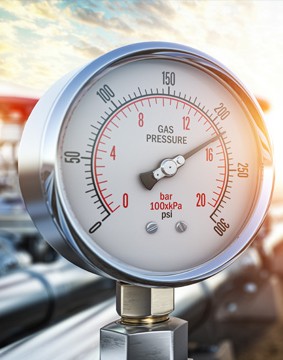
Designed for gas-to-gas and gas-to-liquid heat exchanger duties
Many industries are transitioning to more and more gas-based processes. This places new demands on heat exchangers since gases have much lower thermal conductivity than liquids, making efficient heat transfer a challenge. To compensate, conventional technologies often require very large units, resulting in higher CAPEX, installation complexity, and limited scalability. Another key challenge is how to combine the demand for high heat transfer rates with the low pressure drop required in many gas processes, especially in systems operating under low pressure.
Alfa Laval’s new plate-and-fin heat exchangers are engineered to meet these exact challenges. Their high heat-transfer-area-to-volume ratio enable compact size, exceptional thermal efficiency, and high capacity – all with a very low pressure drop. In addition, they can handle high temperatures and pressures and are well-suited for demanding cyclic duties.
Alfa Laval´s plate-and-fin heat exchangers are optimized for modern gas-to-gas and gas-to-liquid applications – from next generation energy systems and chemical processing to compressor cooling and industrial heat pumps.
Ideal for all types of compressor applications
Compressor cooling
With high thermal efficiency and low pressure drop, plate-and-fin heat exchangers are perfectly suited for compressor cooling in multi-stage gas compression systems, where they improve compressor efficiency or throughput.
Industrial heat pumps
Their low refrigerant charge, tight temperature approaches, and ability to handle cyclic operation under high pressures make plate-and-fin heat exchangers ideal for boosting the energy efficiency of large-scale industrial heat pump systems.
Energy storage
Plate-and-fin heat exchangers enable efficient heat recovery in thermal energy storage applications – including molten salt systems – ensuring high roundtrip efficiency.
Refrigeration systems
The compact footprint, low refrigerant charge, absence of gaskets, and excellent reliability make plate-and-fin heat exchangers a smart choice for large-scale refrigeration systems.
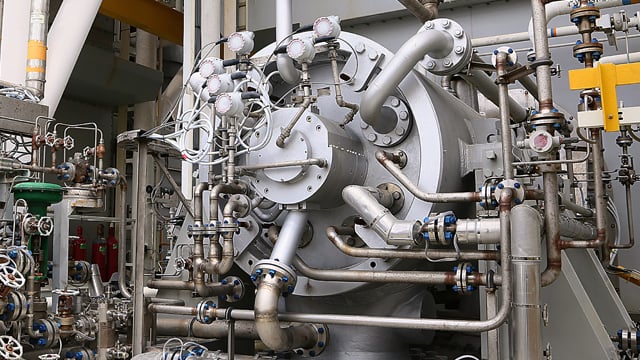
How it works
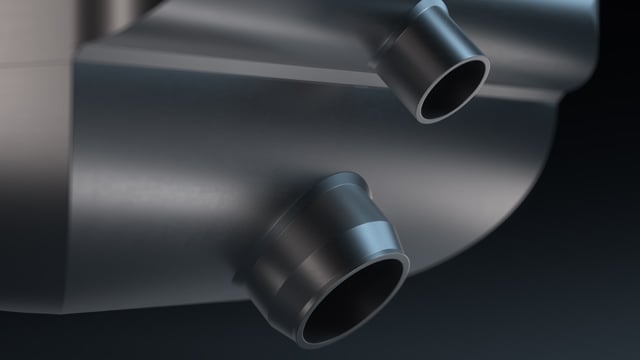
Similar to a traditional plate heat exchanger, a plate-and-fin unit distributes the hot and cold streams across multiple channels, each separated by plates.
The key difference compared to a traditional plate heat exchanger is the use of many small fins connecting the plates in each channel. These fins create numerous channels and dramatically increase the surface area, which maximizes energy transfer and minimizes unit size. The large number of channels also results in an exceptionally low pressure drop.
This unique combination of high thermal performance, compact size, and minimal pressure drop makes plate-and-fin heat exchangers particularly well suited for large-scale gas-to-gas and gas-to-liquid duties. These applications are often challenging due to the low thermal conductivity of gases, but the extremely large surface area in a plate-and-fin unit effectively overcomes this limitation.
The fully welded construction – reinforced by all the fins – creates a strong yet flexible structure, making it ideal for cyclic operation under high pressures and temperatures.