
A wastewater plant's creative upgrade
For more than 20 years, the Gwinnett County F. Wayne Hill Water Resources Center relied on six Alfa Laval Sharples DS-706 decanter centrifuges to process and dewater wastewater biosolids. While these machines had performed reliably, the team recognized that advances in technology could deliver greater efficiency and help meet future regulatory requirements. Seeking more environmentally responsible solutions, they decided to upgrade their equipment to reduce waste and operating costs while supporting the facility's long-term performance and environmental goals.
DATE 2026-09-29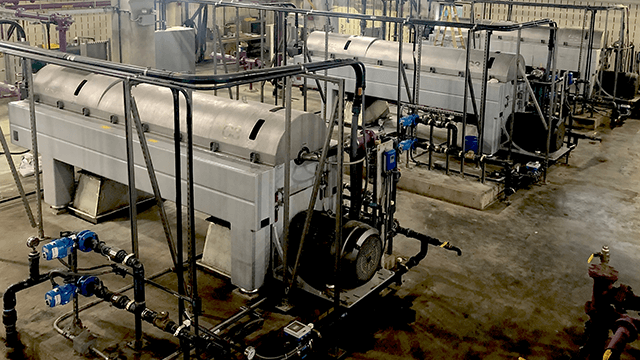
The challenge
The Gwinnett team faced a significant challenge: reducing their environmental impact while managing the immense cost of sending countless tons of dewatered biosolids to landfills each year at the cost of over $6 million. The team needed an innovative way to turn these biosolids, a byproduct of wastewater treatment, into something valuable. How could they transform what was once considered waste into a marketable product, such as fertilizer, that offsets costs and creates long-term environmental and economic value?
The solution
Understanding the project’s magnitude, the Gwinnett team adopted a long-term, phased approach. The first critical step was upgrading their infrastructure. Working closely with Alfa Laval’s water team, they modernized their control systems by integrating advanced automation, real-time monitoring, and enhanced decanter control capabilities.
These upgrades provided greater operational visibility and control, improving biosolids dryness while significantly reducing energy consumption and polymer usage.
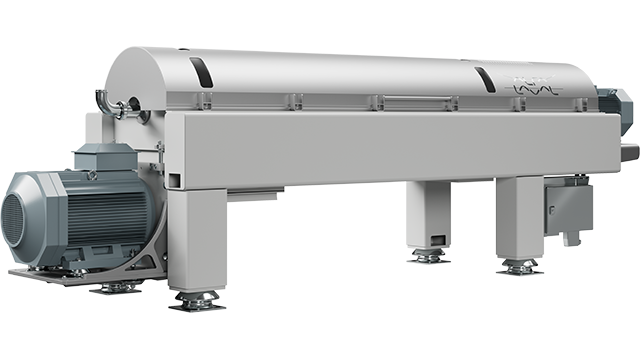
One of the most transformative steps was replacing their 20-year-old decanters with Aldec G3 125 decanter centrifuges. Designed for higher performance and efficiency, the new units deliver improved results while using fewer resources. The team already saw significant improvements with their installation, but the vision continued.
Project outcomes
|
Aspect improved |
Before (DS-706) |
After (G3-125) |
Impact |
|
Cake dryness |
21% |
23% |
Close to 6000 tons less to truck to landfill - saving hundreds of thousands of dollars a year |
|
Solids recovery |
~96% |
~99% |
Greatly reducing the need to reprocess large amounts of solids through the system |
|
Polymer usage |
15-17% less |
~$300,000 less in annual polymer costs |
|
|
Energy usage |
~45 to 50% reduction |
Varies with energy cost and loading but, for 6 large machines, the difference can be hundreds of thousands of dollars a year |
Next steps
Looking ahead, the next phase of the project promises to be even more impactful. The team plans to install dryers capable of removing 90% of the remaining water content from their biosolids. Once dried, the resulting product can be sold as high-quality fertilizer, turning what was once a costly waste product into a profitable resource. In addition to generating revenue, these dryers will eliminate the need for costly landfill disposal and hauling, further slashing operational expenses.
The Aldec G3 decanter centrifuges will continue to play a critical role in this phase. By removing more water than their predecessors, they reduce the energy required for drying, helping optimize the overall process and improve cost efficiency.
A vision for the future
Gwinnett County is embarking on an exciting journey towards a more resource-efficient future. Their dedication to reducing environmental and financial impact of their wastewater facility is a testament to their forward-thinking leadership. By transforming waste into valuable fertilizer, they’re not only cutting costs for their taxpayers but also contributing to a circular economy. This project showcases how modern wastewater treatment plants can integrate innovative solutions to achieve both environmental sustainability and operational efficiency.
The Gwinnett team’s commitment to investing in cutting-edge technology and embracing innovative thinking has set a powerful example for other municipalities to follow. Their partnership with Alfa Laval reflects a shared mission to support both the local community and the broader environment.
Highlighted technologies
Benefits
Improved dewatering efficiency, upgraded control systems, and more efficient decanter performance – reducing electricity use across treatment and downstream sludge handling.
Less landfill transport, lower electricity consumption, fewer chemicals – while moving more water out earlier in the process.
Subscribe to our Wastewater Newsletter
Sign up to receive monthly insights from across the water and wastewater industry, delivered straight to your inbox.
Transforming wastewater treatment
Renew and future‑proof your municipal wastewater treatment systems with Alfa Laval’s industry‑leading technologies. With more than 70 years of experience in wastewater treatment solutions, Alfa Laval helps municipalities improve sludge dewatering efficiency, operational reliability and regulatory compliance while reducing lifecycle costs. Discover how advanced solid–liquid separation technologies and proven process optimization strategies can help wastewater treatment plants meetstricter regulations and growing capacity demands.
Watch the on-demand webcast to learn how municipalities can future-proof their systems with scalable technologies and practical process optimization strategies.