
Fouling in your refinery: why your energy costs are so high how you can fix it.
Why tackling fouling is so important: In refinery operations, maintaining efficient heat transfer is essential for reliable and energy-efficient performance, yet fouling remains one of the most common limiting factors. As materials like minerals, sediments, corrosion products, biological matter and hard organics deposit on the heat exchanger, it affects performance, production uptime, and fuel consumption, accumulating throughout each product’s life cycle.
DATE 2026-06-09This gradual build-up not only degrades heat exchanger performance but also reduces the overall ability of the plant to recover heat effectively. As fouling increases, more energy is required to achieve the same process duties, leading to higher fuel consumption, increased operating costs, and greater CO₂ emissions. Choosing the right heat exchanger and staying on top of fouling with a regular maintenance plan is vital to maintain performance, keep costs low, and maximize energy efficiency.
Where it matters most
Crude distillation units (CDU) are at the heart of refinery operations, separating crude oil into different fractions through atmospheric distillation. Before entering the furnace, the crude passes through the preheat train, a series of heat exchangers designed to progressively recover heat from hot process streams and reduce overall energy consumption.
Within this preheat train, the crude is gradually heated step by step, with each exchanger contributing to the preheating process before the final temperature increase takes place in the furnace. The last position in the train, just before the furnace, is particularly critical as it operates at the highest temperatures and is therefore the most sensitive to the effects of fouling and performance losses.
As the last equipment in the train becomes fouled, the targeted temperature (Coil inlet temperature, CIT) can no longer be reached, and over time the gap continues to increase. With a 20°C drop in CIT over one year due to fouling, this results in an increase of approximately 100 GWh in furnace duty. As the last equipment in the train becomes fouled, the targeted temperature (CIT) can no longer be reached, and over time the gap continues to increase. This difference must therefore be compensated by the furnace, which leads to a higher furnace duty. As a consequence, this results in an additional fuel cost of around 5 M€ and an increase of approximately 20 700 tons of emissions.
How to tackle fouling for good
Depending on the equipment and processes step, different fouling mechanisms require different cleaning strategies and adapted maintenance plans to optimize performance and minimize maintenance shutdowns. As selecting the right cleaning method depends on the type of deposits and operating conditions, there are a few things to take into account before cleaning: type and severity of fouling, accessibility, required cleaning frequency, and minimizing downtime during maintenance. To support this, Alfa Laval Service offers performance assessment and site audit programs to accurately evaluate the condition of the heat exchanger and monitor its performance over time. These evaluations help identify performance losses, determine optimal cleaning intervals, and select the most suitable maintenance methods. Based on the results, Alfa Laval offers a broad range of cleaning solutions both on site and at one of our global dedicated service centers.
These cleaning methods include:
- Mechanical cleaning / Water jet cleaning: Mainly used for soft fouling such as sludge, mud, biological deposits, or loose hydrocarbon residues, this cleaning method uses high-flow water jets to remove deposits without damaging the heat transfer surface. It is a fast and efficient maintenance solution to use during shutdowns.
- Very high-pressure water jet cleaning (up to 600 bar): This is recommended for the hardest and most compact fouling materials, like pyrocoke, polymerized hydrocarbons, or strongly adhered mineral deposits. The high-pressure jets are able to penetrate and remove dense deposits and restore heat transfer efficiency.
- Chemical cleaning (bath or CIP – Cleaning In Place): When deposits like scaling, salts, corrosion products, or hydrocarbon residues can be dissolved chemically, this is the cleaning for you. CIP cleaning allows the exchanger to be cleaned without dismantling, which reduces maintenance time and operational disruption.
- Pyrolysis cleaning: This cleaning is mainly applied to severe organic fouling, coke, and polymerized hydrocarbon deposits. The exchanger is heated under controlled conditions to thermally decompose the deposits into ash or brittle residues that can then be easily removed mechanically.
- Ultrasonic cleaning: suitable for delicate components or complex geometries where conventional mechanical cleaning is difficult. This is where high-frequency ultrasonic waves are used to create cavitation bubbles in a liquid bath, effectively removing fine particles and deposits from hard-to-reach areas without damaging the equipment.
The next step in digital monitoring
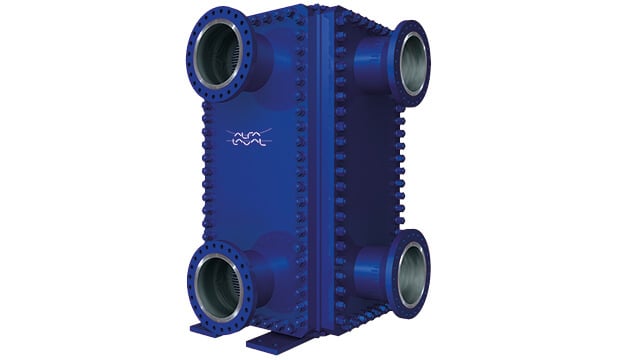
So, now we know that regular cleaning and maintenance is essential, the next step is to catch fouling before it even becomes a problem. At Alfa Laval, we are continually advancing towards smarter, more energy-efficient solutions that go beyond traditional maintenance. Today, digital monitoring is reshaping how refineries manage their heat exchangers, especially the Compabloc. By leveraging digital twin technology, AI, and decades of expertise, our customers can move from reactive to proactive asset management. This approach not only detects and addresses fouling before it affects cost or performance, but also unlocks new levels of reliability, efficiency, and sustainability. With real-time insights and predictive analytics, every Compabloc can operate at its full potential, ensuring operational excellence is achieved through data-driven clarity rather than chance.
Want to know more about how you can tackle fouling for good in your refinery? Contact one of our seasoned experts for a breakdown on the best service plan for your application.

Tags
All