
A cutting-edge energy system converting waste heat to hot water
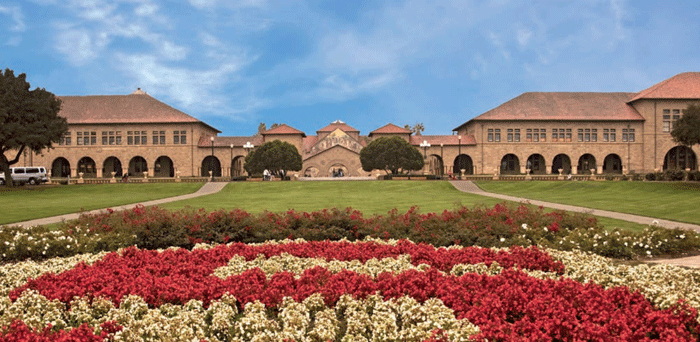
For more than three decades, Stanford University has played a leading role in the pursuit of minimized environmental footprint derived from campus activities. The institution has stringent buildingstandards and separate energy metering in all facilities – along with investment in water conservation, renewable energy and sustainable on-campus commuting.
DATE 2025-12-30Bold solution creates economic and sustainable gains
Since 1987, their energy has been produced in a cogeneration plant fuelled with natural gas and using steam as heat transfer medium. Waste heat from the combustion process produced electricity, while most of the heat generated from the cooling processes evaporated into the atmosphere.
The Sustainability and Energy Management Department wanted to recover the waste energy to meet the campus heating needs too. This goal was timed just as the steam turbines were approaching the end of their life cycle and plant owner contract was expiring. It was the perfect time to redesign the 1987 system for new sustainability goals.
Sustainability goals prompted the right time to redesign
The Stanford team researched solutions for more than four years to find the best equipment suppliers. Since Scandinavian countries have an impressive record when it comes to district energy systems, Alfa Laval was selected for unmatched global heat transfer experience.
The Alfa Laval team worked to review the preliminary plan and 3D model and explained how the heat exchanger system would integrate with the existing building system. From design to installation and troubleshooting, Alfa Laval partnered with the University’s contractors and internal team to ensure the project stayed on schedule.
Stanford University made the leap from 30 years of combined heat and power production by natural gas to an Alfa Laval solution of combined heat and cooling process based on electricity.
Stanford awarded in 2016
The innovative Stanford heat recovery system exploits the climate conditions of the area and utilizes the growing volumes of electrical power available from renewable sources. In October 2016 Stanford was awarded by Engineering News-Record (ENR) for 2016 Global Best Projects Award in the category of Green Projects.
Quick project facts
The customer
Stanford University was founded in 1885 and has more than 17,000 students on an 8,648-acre campus in the center of the San Francisco peninsula. It features roughly 630 buildings, 1,194 faculty houses and another 2,145 units for faculty and staff, 140 retail stores and 150 companies in the Research Park.
The challenge
Integration of heat exchangers with a new, first-of-its-kind campus heating system, along with start-up assistance and troubleshooting. Flexible interaction with a constantly evolving project scheme combined with a high degree of customizing.
The solution
High degree of technological flexibility due to the modular structure of the Alfa Laval system. Continuous on-site presence and intense communication with all people involved.
Benifits
Energy savings USD 8.5 million annually
Emissions reductions 50% annually
$300 million savings projected by 2050
Alfa Laval technology used
129 Alfa Laval ETS (energy transfer station) for district energy applications
Configurations:
- domestic hot water only
- space heating only
- combination of domestic hot water/ space heating
Technical specifications:
- Design pressure: 150 psi
- Plate materials: 316 stainless
- Capacity: 250 MBH – 12,500 MBH
Temp parameters:
- space heating 125-155 °F (51,6-68,3 °C)
- domestic hot water 75-140 °F (23,9-60°C)