Fossil-free heating: How Stargard prevents around 38,000 tonnes of emissions from entering the atmosphere with geothermal heat
Stargard’s geothermal energy installation is the second largest in Poland, providing fossil-free heat and hot water to the city’s residents. Owned by the city, this company was looking to modernize and expand their installation and needed a heat exchanger supplier that shared their passion for clean energy solutions and could fit the stringent requirements of their application. With the support of the Alfa Laval T-series, they are able to produce between 350,000 and 400,000 GJ (97 and 111 GWh) of heat every year, preventing an impressive 38,000 tonnes of coal-based emissions from entering the atmosphere.
DATE 2026-06-29With a long experience working with geothermal water, our customer knew the challenges with mineral-rich fluids and the constant risk of salt contamination, leading to fouling, reduced efficiency, and frequent maintenance.
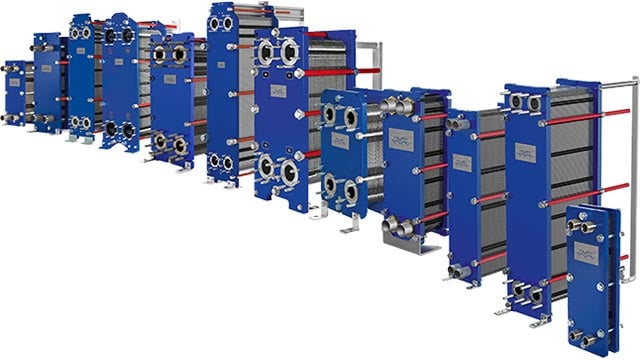
By implementing the Alfa Laval T25 heat exchanger, specifically designed for these demanding applications, they were able to overcome these issues. Thanks to the patented CurveFlow™ technology and optimized plate design, the solution delivers efficient heat transfer in a single-pass configuration. For this customer, it means:
– Stable, high performance despite challenging water quality.
– Significantly reduced maintenance requirements.
– Improved operational reliability and uptime.
– A simpler, more cost-efficient solution in one step.
With the T25, the customer could move from managing prob lems to focusing on performance and long-term reliability.
How it works
The system uses 90 °C geothermal water that has been extracted from a depth of 2,670 m. This is then linked to the local heating networks, where it is distributed as heat and hot water to the people of Stargard.
In summer, and during periods where the ambient temperature doesn’t go below 10 °C, this is the company’s sole source of heat, and the coal boilers can be completely shut down.
In fact, in 2024 geothermal energy supplied over 388,000 GJ (108 GWh)of heat to the heating network out of a total demand of 622,000 GJ (173 GWh). That covers 62% of the resident’s total heat demand coming from 100% renewable energy.
Geotermia Stargard has been thoroughly modernized and expanded in recent years. As part of the investment, four geothermal wells (two extraction and two injection wells) were drilled, and the total cost of the project exceeded PLN 88 million, of which approximately 50% came from EU funds.
says Władysław Zablocki, Director of G-term Energy Sp. z o.o.
Mr. Zablocki continues: “As part of modernization, we had to decide regarding the selection of new heat exchangers with a total capacity of 32 MW. Ultimately, Alfa Laval was selected as the manufacturer, as it met the high requirements. Alfa Laval demonstrated not only extensive knowledge of geothermal applications and experience, but also strong service support and readiness for emergency situations. The total number of wells is 7 (2 production wells and 5 injection wells).”
Energy efficient heating
After discussing the customer needs, Alfa Laval supplied two Alfa Laval T25-BFG plate heat exchangers, coming to a com bined total of 32 MW. This could be linked to 5,000 premises in total, providing essential heat to 95% using geothermal energy alone.
The best part is, this system operates in a closed circuit, so the cooled brine is returned to its source after use. This prevents any kind of ecological imbalance and makes sure that the process is sustainable long-term.
What’s more, Stargard’s solution doesn’t just secure renewable energy as a viable alter native, it also has drastically improves local air quality, removing harmful dust and greenhouse gasses from the atmosphere.
The environmental impact of geothermal energy
Switching from coal boilers to geothermal energy, even to cover part of the year has a dramatic effect on greenhouse gas emissions. For example, for every 400,000 GJ (111 GWh) of heat produced using geothermal energy instead of coal (400,000 GJ x 53 kg/GJ = 21,200 tonnes of coal per year), up to 38,000 tonnes of CO₂ is reduced (assuming emissions of approx. 0.095 t CO₂/GJ for coal according to KOBiZE).
To put that into perspective: more than 1,700,000 trees would need to be planted to absorb the 38,000 tonnes CO₂ of annual emissions, one tree absorbs an average of 22 kg of CO₂ per year.
Follow us on 

As part of modernization, we had to decide regarding the selection of new heat exchangers with a total capacity of 32 MW. Ultimately, Alfa Laval was selected as the manufacturer, as it met the high requirements. Alfa Laval demonstrated not only extensive knowledge of geothermal applications and experience, but also strong service support and readiness for emergency situations.
says Director of G-term Energy Sp. z o.o.