Close collaboration revolutionizes CIP media savings
Alfa Laval and Tetra Pak are working closely on an effort to radically reduce the volumes of media used for CIP (cleaning-in-place) at dairy plants and similar operations, making a significant impact across EMEA markets. By optimizing processes, customers can unlock impressive savings through low-investment, low-effort improvements, resulting in strong gains in both sustainability and profitability
DATE 2026-11-03Every year, thousands of tons of CIP media flow through a wide range of processing equipment to ensure it is clean. In addition to water, CIP media contains various cleaning agents and also generates costs related to heating and waste handling once used. As a result, even small percentage reductions in CIP media consumption can have a significant overall impact.
What if this reduction in CIP media could reach 70, 80, or even 90 percent?
This is the reality of this ongoing optimisation project, built on Alfa Laval’s leading position in hygienic valve technology and Tetra Pak’s extensive process knowledge and industry expertise.
Unlocking what’s already there
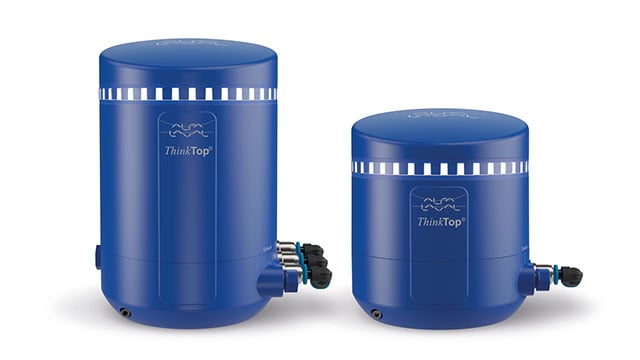
At the heart of the improvements lies a component that is quite unique in the industry: Alfa Laval ThinkTop® V70, a hygienic valve sensing and control unit that enables burst seat cleaning instead of conventional valve seat cleaning.
“Many facilities already have at least a few V70 units in place, since ThinkTop V70 and V50 are somewhat the industry standard today,” says Ahsan Khan, Sales Support Specialist at Tetra Pak. “The only thing is that the burst cleaning feature is not switched on when the units leave the factory, which means that most of our customers aren’t even aware of this capability – or its potential.”
In other words, much of the work with customers is simply about showing them what the equipment they already have installed is capable of.
Higher quality, lower CIP costs
A recent example is a production facility in Riyadh, Saudi Arabia, where the initial tests with burst seat cleaning were quite convincing. A straight comparison of conventional CIP cycles and burst cleaning cycles revealed savings significant enough for the Saudi customer to upgrade all their installed valves to ThinkTop V70, enabling the full potential of burst seat cleaning throughout the facility to be realized. 2
“The consumption was reduced from 2.5–2.8 liters during conventional cleaning to 0.8–1.0 liters with burst seat cleaning,” says Ahsan Khan. “This corresponds to a direct saving in CIP media of approximately 65% reduction for valves cleaning. At this particular plant, this means they will save more than 1,330 tons of CIP media annually. One should also have in mind that this operation is somewhat smaller than average. So, imagine the savings at a much larger facility.”
A counter-intuitive breakthrough
All customers place great importance on maintaining a hygienic and clean operation, and seeing large volumes of CIP media flushing through the valves is often perceived as cleaner. In reality, however, leaving a valve fully open for several seconds while CIP media flows through it adds very little to the actual cleaning process.
“What we discovered during the ongoing development of ThinkTop is that more than 90% of the actual cleaning takes place in the split second the valve opens and closes,” says Jakob Worsøe, Alfa Laval Key Account Manager for Tetra Pak. “This is when the CIP media reaches maximum velocity and strikes the surfaces with the greatest force.”
Smarter cleaning starts at the valve
With conventional cleaning methods, there are delays built in between sensors, the PLC and actuators. As a result, it is not uncommon for valves to remain open for 3–7 seconds during CIP, sending thousands of tons of CIP media to waste each year.
“This is where we saw the potential of building the logic directly into the ThinkTop,” Worsøe explains. “Once it receives the PLC signal, the valve automatically opens and closes in the optimal sequence to complete the cleaning cycle. Without delays, without wasteful use of CIP media, and with equal or better cleaning results.”
“We’ve been very happy with the collaboration and support from Tetra Pak over several years. Especially during our major plant rebuild in 2021 where we experienced a highly responsive and adaptable collaboration with Tetra Pak.
We learned of Alfa Laval’s Valve burst cleaning system around two years ago. When we initially requested that Tetra Pak implement the system, it took some time to introduce it, as the solution was relatively new in the Middle East. In the end, we worked together to get the system installed and it has been running successfully for more than half a year now, supporting our company in achieving its sustainability targets and strategy.
The project has basically paid for itself already. The shortened cleaning times do not risk our hygiene standards, which we have thoroughly tested and verified, and the system also achieves substantial water savings. It’s a great example of how innovation and strong partnership can drive both sustainability and efficiency.” Dairy producer, Saudi Arabia
The results speak for themselves
Another stakeholder recognizing both the success and the challenges of the breakthrough solution is Samir Aldasouqi, Services Key Account Manager at TetraPak in Arabia.
“Changing established cleaning practices, especially around valve cleaning, always comes with challenges — particularly in the food industry where safety and product quality are paramount. That hesitation is completely understandable. However, with ThinkTop Burst cleaning we’ve seen that it meets strict hygiene requirements while significantly reducing both water and CIP fluid consumption. Through close collaboration with Alfa Laval, we are helping customers rethink CIP processes and unlock meaningful savings without compromising on quality.”
The mission continues
The effort to help many more facilities unlock substantial reductions in CIP media consumption continues at full pace.
“The extensive savings in both resources and cost are naturally something we want as many operations as possible to benefit from. Working with this solution and with Alfa Laval as the industry leader in technology is truly a pleasure,” says Ahsan Khan.
The unique product technology is certainly a key strength behind this collaboration, but it’s far from the only one.
“The customers have great trust in Tetra Pak’s deep industry and process expertise, not least when it comes to dairy plants and revalidating the cleanability of the burst cleaning processes. So, I would say that it’s really a combination of Alfa Laval’s technology and Tetra Pak’s application knowledge that makes this collaboration so fruitful and attractive to customers,” Jakob Worsøe concludes.
Combining expertise to deliver more value
The partnership between Alfa Laval and Tetra Pak is built on a strong mutual commercial dependency and a shared ambition to strengthen competitiveness. By combining Alfa Laval’s product and production expertise with Tetra Pak’s application knowledge and market presence, the partners deliver more effective and value creating solutions to customers