
Solutions to adapt and thrive: supporting commercial brewers to be agile and turbo boost diversification in a rapidly changing world
Commercial brewers are facing their most significant period of transformation in centuries, driven by Gen Z consumers who are drinking less alcohol and gravitating toward healthier, more diverse beverage options.
DATE 2026-06-02In the world of brewing, agility and diversification inevitably come easier to those smaller craft beer makers than the bigger commercial operators.
But as this has become a marketplace where consumer tastes and preferences are changing at a rapid pace, flexibility and a willingness to change are now essential attributes that can unlock new horizons and opportunities.
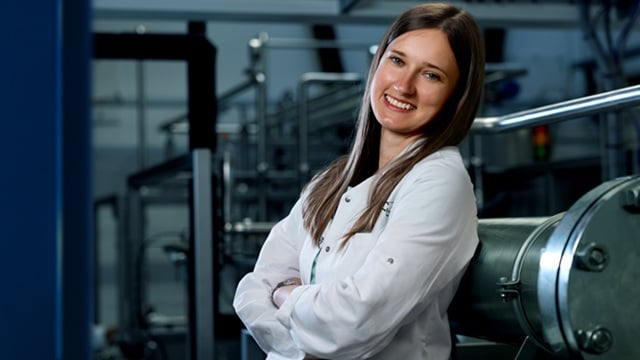
Step forward, Alfa Laval expert Justyna Szczepańska, who is working with larger brewers to help forge these keys to success, and fire a cultural change in an industry that is historically resistant to change.
“There is no doubt about it, this is a transition period for brewers,” says Justyna, who in her role as Global Product Manager, REVOS and membranes at Alfa Laval Brewery Systems, works with many well-known mainstream beer brands.
“Commercial brewing is traditionally very conservative, sticks to tried and tested methods, and is reluctant to make changes. However, the market is experiencing a major upheaval, with shifting drinking preferences driven by Gen Z consumers, and this means that all brewers are going to have to reinvent themselves to succeed.”
Those Gen Z trends will be familiar to many businesses operating across a variety of food and beverage industries, who now face market demands for healthy, nutritious and convenient products that fit with more urban, active lifestyles.
As a chemical and mechanical engineer, Justyna loves the challenge of finding innovative solutions to revamp decades-long processes to meet these new demands now being placed upon brewers.
“For sure, it is not easy at the moment, and big brands are being impacted, especially in more mature markets like Europe and the US, where the breweries have a model of simply producing large volumes of beer, which now needs to be adapted,” she says.
“But while there are pressures, I also see opportunities and thankfully so do many of the bigger brewers. If you look at most of their adverts at the moment, they are focusing on the social aspect; they realise that it is a market where people are drinking less alcohol, but they are also looking for communal experiences, and that drinking – whatever the beverage may be – is at the heart of that.”
How shifting consumer tastes and Gen Z drinking habits are forcing commercial brewers to rethink everything, and why the boldest will win
The physical manifestation of that change within the larger breweries is the introduction of innovative equipment, such as Alfa Laval’s Low-alc de-alcoholization module, to create new lines and products.
Justyna is working with some of the biggest names in beer to introduce this technology, using Alfa Laval’s world-leading membrane filtration to treat the product more gently through the process, so that the final low or no-alcohol beverage has the same look, smell, taste and feel of ‘normal’ beer.
And while the US and Europe may be on the frontline when it comes to adopting new solutions, Justyna explains that this is something that the global industry needs to be ready to front up to, with countries at different stages in facing the consumer challenge.
“This is where it is very powerful to be part of a global business like Alfa Laval, as we have experience in tackling issues that some countries may be just about to face,” she says. “That is something we are hearing a lot more in our discussions, with customers asking what is going on in other parts of the world, to understand better what might be coming their way.”
That shift in mindset among brewers is even seeing some companies looking to take the health aspect of beer-drinking a step further and producing a beverage that is not only alcohol-free but calorie-free!
“This is an exciting development with a lot of potential and, again, it is an area where Alfa Laval has the technology and know-how to bring real innovation,” says Justyna. “To be able to produce a zero-calorie, no-alcohol beer at scale, which has the same taste and feel of an alcoholic beer, would be a game-changer.”
Meanwhile, another way that breweries are rising to meet the shift in consumer tastes is by looking beyond beer – alcoholic, calorific or otherwise – and adapting or introducing new equipment to produce ready-to-drink (RTD) products, such as canned cocktails and hard seltzers.
Again, this is an area where the craft brewing sector potentially has the march on larger commercial operators as it has the ability to be more fleet-footed and make bold decisions regarding its total output.
Justyna notes, for instance, that one smaller Chinese brewery she has been talking to has transformed its operating model so that only around 30% of its total production is now alcoholic beer. This is in response to a huge shift in the local market where the popularity of RTDs has soared over the last two years.
“RTDs have become very popular in Asia and Europe, while in the US consumers are turning more towards hard seltzers,” says Justyna. “For commercial breweries, there is a real opportunity to meet this growing demand.
“It does take a significant change in mindset and can be a nerve-wracking thing to do, but ultimately it does not look like this consumer trend is going to go away, so those brewers who take the bold steps will be those who win.”
It is not always a popular message to take to traditional breweries. Justyna highlights one production manager who was bemoaning the fact that the young workers coming into the brewery didn’t actually seem to have a taste for beer. But ultimately, the market is king in the current climate and those who hold on to old ways of thinking will likely struggle.
“It is a discussion we are having in many places, and Alfa Laval has the ideal equipment in its portfolio to support this transition into including RTDs or hard seltzers into the production,” she says. “And what is more, we will continue to support to ensure that the technology is doing the job in delivering the new products.”
In this respect, Alfa Laval has a head start on many of its competitors as it partners and collaborates with pioneering breweries to test out and develop its technology. This happens most in Asia, where Justyna says that brewers are particularly forward-thinking and are leading the way when it comes to developing new processes and methods for producing beer alternatives.
From low-alcohol beer to hard seltzers and zero-calorie brews, Alfa Laval's Justyna Szczepańska on the technology helping big breweries reinvent themselves
Amidst this significant diversification challenge, commercial brewers are also having to face up to familiar old-school issues that often afflict the industry. Rising raw material and operational costs mean that it is imperative that they find ways to produce more for less, which boosts the bottom line and also has the added benefit of delivering a sustainability dividend.
Again, this is an area of Alfa Laval expertise, and one in which Justyna has particular specialism.
“It is in our DNA, of course, and across many industries our technology targets ultra-efficient processing, which uses fewer raw materials, minimizes energy consumption and generates water or treats wastewater streams that can be reused,” she says. “This also sends a message to consumers that the brewer cares about sustainability, which is a powerful marketing point in itself.”
In brewing specifically, Alfa Laval has developed a concentration method in REVOS, which concentrates the beer at the central brewery, for rehydration at local facilities.
“Beer concentration is relatively new to the market, but we see a huge interest in REVOS and two big breweries already use this solution with others looking at it,” says Justyna.
The Revos™ concentration system uses high-pressure, low-temperature reverse-osmosis technology to remove water from beer, wine and cider after fermentation to produce a quality concentrate with up to 22% alcohol by volume (ABV). When rehydrated, it has the same taste, aroma, minerals and alcohol content as the original product.
This saves significantly on water, CO2 emissions and cost as fewer transport journeys are required, and is yet another innovation that is driving change in an industry that has probably faced more transformation in the last five years than it did in the previous five hundred.
“Alfa Laval is on hand to be an expert partner for commercial brewers during these changing times,” says Justyna. “They face the same challenges as craft breweries, but magnified because of the scale of their operations. Their size might make it easier to survive, but ultimately, the challenges remain the same.”
Working with both commercial brewers and their craft beer counterparts, Alfa Laval has a deep understanding and empathy for the issues facing the whole industry, and knows that a one-size-fits-all approach is not the way forward for its customers.
“We take a holistic approach, have open conversations with our customers and look at solutions on their own merit to try and make difficult times easier,” Justyna says.
“We have an active approach to innovation, and once we open discussions with brewers, it becomes clear that we can help in so many ways: the filtration, the cleaning, the sustainability, changing components or entire processing lines; it is such an exciting area in which to work.”
And when it comes to looking forward, Justyna is convinced that whatever the challenges, the future is bright for commercial brewing.
“I am optimistic about the industry. Big brewers can thrive if they are bold and make these big decisions over the next few years, before it is too late,” she says.
“I think the current trends will intensify over the next few years. The world is changing whether we like it or not, and it is not about liking it; it is about accepting it. Some don’t agree, which is fair enough, but at the end of the day, the market will decide.”
Contact
Highlighted industries

Tags
All