
Transformative separator boosts Brazilian soybean processing giants
Advanced key separation technology developed by Alfa Laval, XSEED 80, is living up to its name as it delivers transformative results at a leading soybean processor in Brazil, increasing capacity by 20% and achieving an estimated payback time of around four months.
DATE 2026-10-08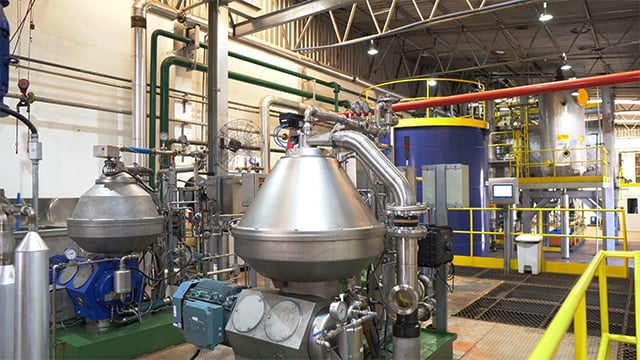
Camera Agroindustrial, based in Rio Grande do Sul in southern Brazil, is one of the biggest names in the country’s soybean industry, and a driving force in its biofuel sector.
With Brazil’s new biofuels policy and regulations creating growth opportunities, Camera Agroindustrial needed to increase their throughput to meet growing market demand, while meeting the stricter quality requirements.
They made the decision to replace their original separator with Alfa Laval’s brand-new and larger XSEED 80 model, before it even came to the market, to solve this double dilemma.
More capacity and boosted yield
Appropriately enough, this new-generation centrifuge, with its multiple features and innovative design, has definitely exceeded expectations in its first outing in an operational setting. And the estimated four-month payback time is even more exciting for edible oil producers when you consider that it can be configurated for multiple processing challenges – not just biofuel production.
“Our experience with the XSEED 80 has been highly positive, delivering strong process yields, smooth and reliable operation, and has come with outstanding support from Alfa Laval,” says Flavio da Silva, Camera’s Operation Manager.
The XSEED 80’s larger bowl size has helped deliver the 20% increase in processing capacity, which equates to an additional 40,000 tonnes of biodiesel produced every year.
Yield is further boosted by the superior separation efficiency achieved through its hermetic bottom-fed inlet design and key advanced features such as the LevelUp, new-gen Centrizoom™ and Operating Water Module (OWM). These saw the XSEED deliver a reduction of 0.5% in oil losses, equivalent to almost an extra 1,000 tonnes a year.
Oil quality
Part one of the challenge was achieved with flying colours then, but what about the quality of the oil, a vital factor now it faced more rigorous oversight?
This too was delivered in outstanding fashion as the precision fine-tunning of XSEED produced superior degummed oil quality, obtaining residual phospholipid below 10 ppm (parts per million) and avoiding additional downstream processing.
And on top of these two key benefits unlocking the full potential of Camera’s operations, XSEED also uses less water, requires less maintenance and operates with higher uptime. “In this case, when we compare it with the old model, the customer could save on average 25% of water consumption”, said Favian Guevara, Alfa Laval’s global edible oil and protein separation specialist.
Its outstanding success is a victory for dynamic and bold business decision-making and a testament to the powerful relationship that Alfa Laval has developed with Camera Agroindustrial over many years.
“Camera is the kind of customer that is always looking to use the latest technical updates, and is willing to take a risk and try different things,” said Favian. “They leapt at the opportunity to try XSEED 80, even though they knew it was the first industrial use, and they have been rewarded in a big way.”
Fabio Napolitano has been working with Camera since he joined Alfa Laval five years ago and says that trust has been the foundation on which this project has been built.
“We have a long history together and Alfa Laval has been an expert partner. They are very confident in our proposals and are keen to try out special models when they become available,” he says.
“This gives real benefits for both of us as they get first use of new technology, which gives them a real operational boost over competitors, and we have the opportunity to monitor its performance in a real working environment and refine it as we go to make sure the technology is operating at its maximum effectiveness.”
A high-performance, feature-rich solution
Digging deeper into the make-up of the XSEED 80, you can see how the combination of high-performance components delivers such outstanding overall results.
The LevelUp feature gives a much more stable interphase position, ensuring optimum disc stack performance and highly efficient separation, while the hermetic inlet sees product being fed through a hollow spindle at the bottom of the bowl and then flowing directly into the disc stack. This gentle feeding means less pulverization of the heavy phase, saving energy, and boosting final product quality.
The energy savings and reduced downtime are further enhanced by the variable speed functionality, and the sheer robustness of the different elements of the XSEED. For example, every 10% of bowl speed reduction saves up to 20% of energy consumption.
The new OWM has a pneumatic piston with a compressed air buffer, which means discharge volume can be proportionally adjusted to give more control and consistency, while the gear-drive transmission efficiently transfers power from the motor to the bowl spindle through a precision worm-gear drive.
At the heart of this advanced technology are materials that are industry-leading in their robustness, with the bowl being made of high-performance stainless steel, which gives higher corrosion resistance for applications like biofuel pre-treatment and some degumming methods, while the hard chromium plating of the bowl and discharge liners offers an unmatched wear protection that further boosts lifespan.
To complete this game changing package that the XSEED 80 offers, Alfa Laval has included a new version of its Centrizoom ™ feature. This technology adjusts the separator position before discharge so the liquid interface pushes the heavy phase toward the centre of the bowl, avoiding the risk of losing the liquid seal in the bowl and reducing oil losses, and then automatically adjusts the position of the interface during the discharge sequence.
This enables efficient handling of high-viscosity media and minimal product loss, ideal for Camera’s needs, and this version is easier to calibrate as the need for an IP converter has been eliminated and the CZ position signal can be sent directly to the Centrizoom™.
It all adds up to a new unit that is set to transform the edible oil separating landscape when it officially launches to the market later in the summer. Fabio Napolitano sums it up, saying: “Our new XSEED 80 empowers customers to achieve more from every processing line - combining cutting-edge separation technology with proven robustness to maximize oil yield, minimize losses, improve oil quality, and reduce total cost of ownership.”
