2026-07-30
From ambition to action: Alfa Laval at the IEA’s 11th Global Conference on Energy Efficiency
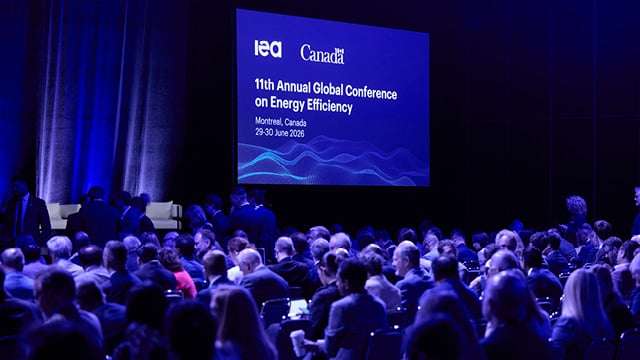
The 11th Annual Global Conference on Energy Efficiency, co-hosted by the Goverment of Canada and the International Energy Agency (IEA), brought together over 600 ministers, CEOs, and senior leaders from government, finance, and business in Montréal, Canada, on 29–30 June. As the world’s leading forum for advancing energy efficiency, this year’s conference marked a decisive shift in tone and focus - from what needs to be done, to how to do it.
One of the headline outcomes was the launch of the Montréal Collaboration Framework, a joint framework to strengthen collaboration between industry, policymakers, and financial institutions to double the global rate of energy efficiency progress by 2030. With implementation at its core, the Framework provides a roadmap for coordinated action to accelerate large-scale deployment and deliver economic, energy security, and decarbonization benefits. Rather than adding to a growing list of pledges, the Framework is designed to turn existing commitments into coordinated, system-level action, bringing industry, policymakers, and financial institutions together around a shared delivery agenda.
The Montréal Collaboration Framework: turning ambition into action
Energy efficiency has no shortage of ambition. What it has lacked is coordination. Too many initiatives remain isolated, limiting their impact and scalability. Investment pipelines are fragmented. Policy frameworks are inconsistent. The result is a persistent gap between what is technically possible and what is actually deployed.
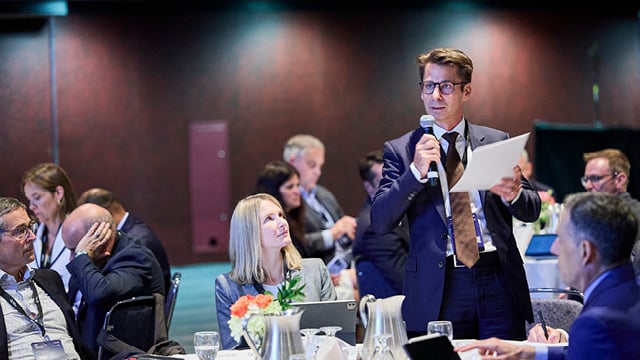
The Montréal Collaboration Framework, convened in the CEO Roundtable at the conference, in partnership with the Energy Efficiency Movement (EEM) and Hydro-Québec is designed to close that gap. “What makes the CEO Roundtable genuinely powerful is the combination of voices in the room: private sector, financial institutions, and policymakers, all working together to identify and remove the real barriers to progress,” says Thomas Møller, President of the Energy Division, Alfa Laval. “When those three groups engage seriously with each other, that is where the breakthroughs happen.”
The Montréal Collaboration Framework unites leaders from industry, finance, and policymaking around a number of practical pillars.
Industry can accelerate implementation by
- Bundling projects: Aggregating energy efficiency measures into larger portfolios to improve efficiency, reduce costs, and attract financing at scale.
- Strategic integration: Elevating energy efficiency to a board-level priority, with clear targets and KPIs embedded across operations and supply chains.
- Clear standards: Establishing technical standards and transparent procurement signals to accelerate adoption and reduce complexity.
- Cross-value chain collaboration: Building partnerships across industries and with financial institutions to develop bankable, system-wide solutions.
Accelerating energy efficiency at scale will require industry to move decisively from ambition to implementation by aggregating projects, embedding efficiency in core business strategy, adopting clear standards, and strengthening collaboration across the value chain.
At the same time, policymakers must establish the enabling regulatory frameworks, market signals, and incentives, while financial institutions provide the financing solutions, risk-mitigation tools, and investment structures needed to unlock deployment at scale.
For financial institutions, the framework highlights four priorities: developing tailored financial products, strengthening risk-mitigation and MRV frameworks, enabling aggregation and standardization, and mobilizing capital through green finance instruments. Meaningful progress will depend on companies' deploying and investing, financial institutions financing and de-risking, and governments enabling and stabilizing, all acting in close coordination.
Alfa Laval at the table: from CEO Roundtable to Commissioner dialogue
Alfa Laval played an active role throughout the conference, both as a voice of the private sector and as a convener of high-level dialogue.
For the third consecutive year, Alfa Laval, representing the Energy Efficiency Movement, was moderating and facilitating the outcome of the CEO Roundtable, a closed-door session bringing together leaders from industry, financial institutions, and government to discuss how to accelerate energy efficiency at scale and unlock greater investment in proven solutions. The Montréal Collaboration Framework emerged directly from this dialogue.
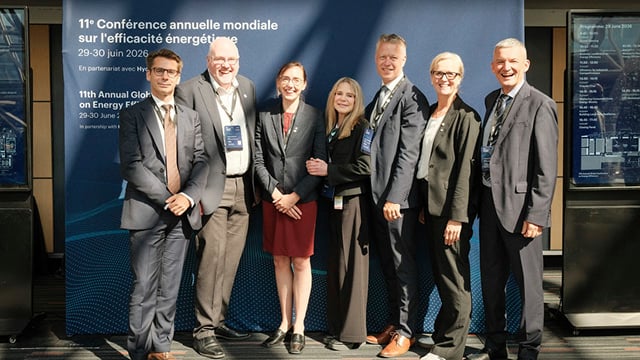
On the margins of the conference, the Energy Efficiency Movement convened a high-level meeting with Dan Jørgensen, European Commissioner for Energy and Housing. The session brought together representatives from Alfa Laval, ABB, Munters, Siemens, AFRY, SKF, and Deutsche Bank to discuss the challenges and opportunities at the intersection of energy efficiency, electrification, and sustainable finance in Europe. The group aligned on the need for stable regulation, clear targets, a positive investment narrative, and deeper collaboration across industry and finance to drive European competitiveness.
The path forward
The 11th IEA Global Conference on Energy Efficiency made one thing clear: the era of ambition is over. The era of delivery has begun.
The Montréal Collaboration Framework sets a concrete path forward — one that recognizes no single actor can close the energy efficiency gap alone. Only through joint action across industry, finance, and policy can the world move from isolated pilots to the coordinated, system-level implementation that climate and competitiveness goals demand.
Tags
All