
Safe, ready and evolving – engineering for the future with ammonia
Alfa Laval is advancing the safe use of ammonia as a zero-carbon marine fuel, addressing its toxicity via comprehensive, versatile systems. The strategy uses the FCM Ammonia and a layered safety design that features a redundant Ammonia Release Mitigation System (ARMS): an always-available water-based vent treatment system combined with a boiler-based incineration system. This hybrid approach, built on resilience and experience from prior fuel transitions, optimizes performance while meeting IMO guidelines.
DATE 2026-10-08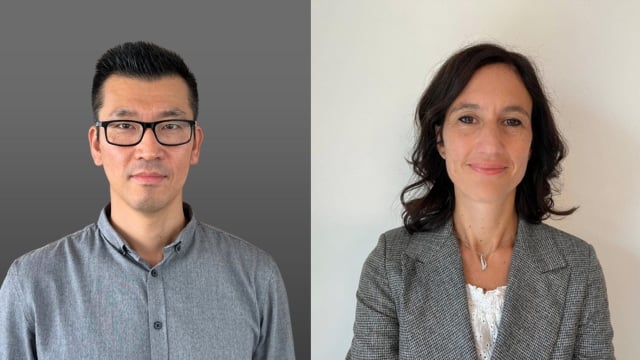
Authors- David Jung, Business Development Manager, BU Heat &Gas Systems, Alfa Laval and Nicoletta Spazzadeschi, Process Engineering Manager and Innovation and Sustainability Specialist, BU Water, Wind & Fuel Solutions, Alfa Laval
"Safety isn’t just about equipment – it’s about thinking ahead, understanding what can go wrong and building in reliability and contingency from the start." – David Jung
"The shift to ammonia requires holistic system integration. We're designing solutions to evolve with real-world requirements, ensuring every component works together to meet the highest safety and environmental standards." – Nicoletta Spazzadeschi
Ammonia holds great promise as a zero-carbon marine fuel – but it comes with very real risks. It is toxic, it is unfamiliar as a marine fuel and the distribution infrastructure is still under development. For shipowners, this creates a dilemma: how to prepare for a fuel that is not yet fully defined?
At Alfa Laval, we believe the answer lies in engineering systems that are not only versatile and compact in design but also comprehensive in scope and efficient in execution. In this second part of our ammonia blog, we explore how we’re turning uncertainty into capability – with solutions that are built to integrate and perform as real-world requirements evolve.
The WinGD Engine Research & Innovation Centre at Winterthur in Switzerland has been equipped specifically to handle ammonia – with equipment for safe storage, distribution and controlled combustion. It’s here that we’re testing the FCM Ammonia and validating its performance with WinGD engines.
We are also preparing to begin combustion trials of ammonia in our dual-fuel boiler system, simulating both thermal energy generation and ammonia release mitigation system (ARMS) functionality in true scale. This allows us to test not just with theoretical simulation but how systems behave in the exact configuration.
Safety is top priority
Ammonia’s toxicity demands a layered safety strategy. At Alfa Laval, we have embedded this into every level of our ammonia systems – from fuel supply to exhaust treatment.
In December 2023, the IMO issued its Interim Guidelines for the Safety of Ships Using Ammonia as Fuel (MSC.1/Circ.1687). These guidelines reflect not only ammonia’s potential in decarbonising shipping, but also the serious health and environmental risks associated with its use. As the IMO clearly states:
“Sources of ammonia release should be minimized to reduce the probability of ammonia exposure to humans and the environment,” and “Operational gas releases should be collected and handled by a suitable ARMS that should be capable of reducing the ammonia concentration to below 110 ppm.”
Our approach reflects these requirements – and goes beyond them. In the FCM Ammonia, we have selected components through exhaustive material compatibility screening to reduce the risk of leakage from the outset. Leakage tests and built-in safety protocols provide early warning in case of abnormal conditions, while clear crew guidance supports appropriate emergency response.
We’ve also engineered safe purging as a coordinated process between the engine and FCM control systems. Residual ammonia is recovered in the FCM's internal buffer according to engine purging sequences. The resulting vapour containing ammonia is routed to the ARMS solution, ensuring no untreated release even during shutdown or maintenance.
ARMS systems
The FCM vent treatment system
As mentioned in Part 1, we’ve integrated a vent treatment system directly into the FCM that performs the same core function as an ARMS. Its purpose is to remove ammonia from vent gases that cannot be released to the atmosphere, using a process based on multi-stage absorption into water and other neutralising media.
Originally developed for the WinGD ammonia test facility, the system provides a flexible, always-available safety solution – particularly important during purging, start-up and shutdown events when ammonia venting is most likely.
While the system can operate as a standalone unit, combining it with other ARMS strategies – such as the boiler-based system – opens possibilities for redundancy, footprint optimisation and more efficient handling of ammonia-containing liquid solutions.
The ARMS boiler system
Our boiler-as-ARMS design enables safe incineration of waste ammonia gas using existing thermal equipment onboard. This reduces the need for dedicated hardware while providing critical redundancy. Drawing on experience from LNG boil-off gas handling, this approach incinerates ammonia rather than absorbing it, eliminating the risks associated with discharge of ammonia-laden liquids into the marine environment.
This solution is now being piloted on real vessels – including the world’s first order for a marine boiler system specifically designed for ammonia waste gas incineration.
Integration of both systems as comprehensive ARMS
One of the key questions we’re often asked is: why offer both water-based and boiler-based ARMS systems?
The answer lies in readiness and efficiency – both crucial for safety and operability. The two systems each come with distinct pros and cons, and combining them allows us to deliver more robust solutions while optimising space and performance.
The boiler system has the advantage of being already present on board many vessels, especially for steam generation. Adding ARMS functionality requires only modest additional equipment – a small gas valve unit with limited footprint and pipe connections. This thermal oxidation route avoids generating liquid waste and enables venting within acceptable ammonia thresholds.
However, the boiler system is not always readily available. The first mode of boiler system is to generate steam when the ship has such a demand. During a normal voyage, this steam demand is often covered via a waste heat recovery boiler, without combustion of fuel, therefore the boiler is on standby. If a sudden release of ammonia without notice has to be processed immediately, it is unavoidable that some of the ammonia release will not be incinerated by boiler.
By contrast, the water-based system is always available – with no warm-up time and immediate neutralisation of ammonia as it enters the tank. It’s simple and effective. But it has operational trade-offs:
- Requires a new tank for the single purpose of ammonia release mitigation
- Generates liquid waste (and chemical waste)
- Freshwater replenishment and space for holding tanks must be accounted for
Combining the two systems delivers the best of both worlds. The boiler-based system can handle all planned discharges, while the water-based system serves as a reliable back-up solution – especially useful in emergency situations. This hybrid configuration also enables optimised tank sizing and freshwater consumption.
Redundancy is resilience
In safety engineering, having two systems that can independently perform a critical function is not a luxury – it’s resilience.
This dual ARMS approach also opens doors to footprint optimisation and more efficient freshwater use, particularly in ship types where space and resources are tightly constrained. Ultimately, it reflects our core design philosophy: anticipate failure, plan for success.
We’ve been down similar paths before. Our journey with ammonia is informed by experience with earlier fuel transitions – including LNG, methanol and low-flashpoint alternatives.
For instance, our use of boilers to incinerate ammonia builds on years of LNG practice, where boil-off gas is safely combusted rather than vented. Similarly, our FCM Ammonia incorporates dynamic control logic not just for continuous fuel delivery, but also for safe purging, start-up and shutdown – all of which are critical when dealing with toxic substances.
And looking ahead, we are exploring how control system data and remote monitoring could support predictive maintenance, helping crews and shore teams manage risk more proactively.
Building a strong foundation
If you’re exploring ammonia, Alfa Laval is ready to help – not just with products, but with the insights and support that make new fuel transitions viable.
We understand the pressure to decarbonise. We also understand the risks of rushing into the unknown. That is why we build with modularity, safety and co-creation at the core.
Explore more
Read Part 1 of the ammonia blog -On track with ammonia: Alfa Laval’s next-generation products take shape
Ammonia is gaining traction as an alternative marine fuel but safe, practical integration of ammonia dual-fuel systems remains a key concern for shipowners. In our latest Marine Expert-Ease blog series, Alfa Laval Marine experts David Jung and Nicoletta Spazzadeschi introduce our next-generation FCM Ammonia system and Aalborg multi-fuel boiler products and outline how they are already being delivered as part of real vessel projects.
Marine equipment and solutions for ammonia
Ammonia is a promising zero-carbon marine fuel. Alfa Laval is developing safe, efficient systems to support its use, including boilers and fuel handling.
Alfa Laval secures order for the world’s first marine boiler system for ammonia waste incineration
Read about Alfa Laval developing the world’s first marine boiler system designed for the safe incineration of ammonia emissions.
FCM Ammonia
Learn about Fuel Supply System for ammonia, an advanced low-flashpoint fuel supply system (LFSS)
Powering the energy transition with alternative fuel solutions
Wherever you are in your energy transition - and no matter which fuel you choose - Alfa Laval is here to support you. Our diverse portfolio covers traditional and alternative fuels, including LNG, LPG, methanol, biofuels and ammonia. From enabling alternative fuels to reducing consumption, our cutting-edge technologies and decades of experience deliver fuel-flexible and future-ready solutions that ensure a safe and efficient transition, accelerating your journey to net-zero.
LNG as fuel
Biofuel
Methanol as fuel
Ammonia as fuel
Continue to discover more about our solutions
Marine Expert-Ease
Sustainable shipping
Marine Innovation Centre
24/7 Service & Support
Subscribe to our newsletter
What’s new, what’s next, all in one glance.
Our marine newsletter is your strategic edge - curated insights on operational efficiency, future fuels, and regulatory shifts. Get focused insights on the latest technologies, regulations, and fuel readiness that matter right now. Transform uncertainty into a clear, actionable roadmap by subscribing to our newsletter. Get blogs and insights from our Marine experts delivered straight to your inbox!
Tags
All