Life-cycle thinking – why strategic service is the hidden engine of decarbonization
This first blog focusing on Alfa Laval's Marine Service offering comprises a Q&A interview with Nadine Letzner, Marine Division Manager, Alfa Laval South East Asia and a familiar name to many customers. We explore Alfa Laval's proactive Service vision as a strategic partner for customers throughout the vessel life cycle. Part 2 will focus on how we execute support through our Onboard, Remote and Dry-Docking delivery modes.
DATE 2025-12-01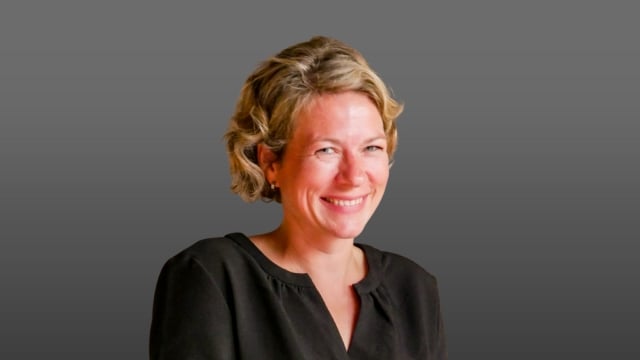
Author: Nadine Letzner, Marine Division Manager, Alfa Laval South East Asia
"We see ourselves as a trusted partner – always there to proactively support our customers both on their decarbonization journey and day-to-day challenges. As knowledge partners, we help them navigate fuel and technology complexities, ensuring they stay compliant, efficient and future-ready." – Nadine Letzner
A mindset shift from transactional to strategic
Q: Considering service in the marine sector today, how have customer expectations evolved in recent years and what’s driving this shift?
"Two things really stand out: performance validation and the need for transparency and predictability. Service used to be largely transactional – the major KPI was typically avoiding off-hire; equipment just needed to work and be reliable – but today, customers expect proof that every service activity delivers real performance improvements. With tighter budgets, stricter regulations like EEXI, EEDI and CII, and growing reporting demands, they need full visibility and detailed planning to justify every long-term investment."
"At the same time we see a strong move towards partnership. Customers now expect us to help them navigate the growing complexity of new technologies and fuels. Our job is to align our service packages to these new demands, helping customers avoid the unplanned maintenance they dread."
Q: The term "life-cycle thinking" can sound abstract to some. What does it mean to you in practical terms?
"Strategically, it means long-term plannability and budget control for the customer. They don't want any unforeseen surprises. Our goal is to ensure performance and uptime over time. We engage in discussions across the entire vessel journey – asking when there is a viable business case for an upgrade or when a replacement or repair is the better option, given the age of the vessel and so on."
The service wheel in action (Explore, start, operate)
Service at Alfa Laval is structured around the Life Cycle Service Wheel, a core framework used across the entire company and which the Marine division has adapted to follow the full journey of a vessel’s equipment through five core phases: Explore, Start, Operate, Optimize and Renew.
Q: The first phase is Explore, focused on gaining foresight and visibility. What do you actually helping customers explore?
"Again, we help customers move from having equipment that functions correctly to operating at the optimal level. The Explore phase takes the form of condition assessments – looking at how the equipment is performing and their plan for the asset moving forward. The growing complexity of new fuels and tightening regulations make it increasingly difficult for crews to keep up and ensure confidence in operating equipment safely and optimally. Supporting effective knowledge transfer and helping vessel teams stay up to date is therefore essential to ensure safe, reliable and cost-efficient operations."
Q: The Start phase deals with installing and commissioning new equipment. What are the typical challenges you see, especially with new fuel supply systems like FCM methanol and ammonia, and how does investing in proper commissioning pay off later?
"The pressure to commission systems quickly and as cost-efficiently as possible is always present, but we stand firm on performing full commissioning using our own trained personnel. Getting crew buy-in and ensuring the entire design is fit for purpose is essential. Every new piece of equipment is new for the crew. Hands-on training and thorough familiarization ensures knowledge is captured onboard even as crews change over time. The implementation of new fuels is a complete game-changer, and we must alleviate crew concerns, ensuring they feel confident operating the equipment, know how to access further competence and information when needed, and fully understand all safety and emergency procedures."
Q: The Operate phase is where customers live day-to-day. What are the most common issues that bring them to you?
"Customers primarily want to avoid unplanned maintenance, unforeseen spare-part requests and service investments, so their most common request is, again, for predictability. We are actively moving toward predictive maintenance using monitoring, connectivity and remote assistance. The second major challenge is standardization. A fleet might have vessels running on FCM ammonia, FCM methanol, LNG or traditional scrubbers – technical complexity has multiplied. Our aim is to find solutions that help customers control upgrade budgets, ensure the right cost-to-value balance and achieve a reasonable level of standardization across often diverse fleets — including all the legacy systems they operate."
Q: How does your 24/7 global support make a difference for crews operating under pressure, as well as shore personal such as technical superintendents, fleet managers and marine and performance superintendents?
"For troubleshooting, our technical support specialists (the majority of whom are ex-field service engineers) serve as the first escalation point. They speak the same "engineer language" as their counterparts onboard ensuring clear communication and deep knowledge access anywhere, anytime. Through our global network we provide a seamless one-stop-shop experience that gives crews peace of mind. We complement remote support with spare parts recommendations to empower the crew to help themselves, and visit the ship if absolutely necessary. Importantly, we also use data from support requests to identify patterns that may indicate an underlying operational or behavioural issues."
Optimizing assets (optimize, renew)
Q: How does Alfa Laval ensure customers maximize strategic opportunities during a required dry-docking (Optimize) and how has your offering become more holistic?
"I always tell customers that dry-docking is not just about renewing certificates, but their best chance to ensure the asset is fit for the future and stays competitive. Our offering is absolutely becoming more holistic. We ask about their pain points and long-term goals. We show them the impact and values of different options, so together we can customize a solution based on their asset's future. We adopt a proactive advisory or consultant role, ensuring they are compliant now and can maintain that commercial advantage for the next five years."
Q: Once a vessel is nearing the end of its life cycle, how do you guide customers through the complex decision-making process for repair, retrofit or replacement (Renew)?
"We always check if the proposed solution is viable from a commercial perspective. For a 25-year-old vessel, for example, I would not recommend a big investment with an ROI of several years; I might suggest a simple solution like using a drop-in fuel like biofuel. We identify the pain point and adjust to the customer's specific goals."
Closing reflections...
Q: The advisory capacity is a clear hidden value of service. Are there any other hidden values you would summarize in your overall offering?
"The key hidden value is the ability to manage the highly complex ecosystem we operate in. Compliance and decarbonization require bigger investments and involve manifold stakeholders: charterers, fuel suppliers, ship owners, managers and chartering departments. This necessitates a totally different collaborative approach. Service is where we can have a dialogue with all these parties – who often have different KPIs – to align on a good business plan that meets everyone's goals. This brings service to a completely different level beyond simple transactional after-sales as in the past."
Q: Looking ahead, how do you think this life-cycle mindset will make the biggest difference going forward, and what keeps you motivated day-to-day?
"The key difference will be transparency around costs. The decarbonization journey provides the necessary impetus for life-cycle assessment because it impacts everyone. This shift, from classical siloed responsibility to total cost of ownership and full life-cycle assessment, is the biggest differentiator. As for motivation, I was a customer myself for 19 years and know the pressures operators face first-hand. What motivates me is finding the right technical solution as a trusted partner – ensuring customers' ships keep sailing with our equipment in great shape."
Explore more
Marine service offering
Discover Alfa Laval’s wide range of services dedicated to uptime, performance, compliance and sustainability on marine vessels. Whatever your need, we coordinate across oceans, continents and time zones to meet it.
How we approach service
From delivery to long term operation, we provide expert support to keep your Alfa Laval equipment performing at its best, at each stage of its life. Explore how we support every stage of equipment’s lifecycle.
Our service product portfolio
We offer a complete portfolio of service products to support your equipment and operations, from setup and training to maintenance, upgrades, and beyond. Each service product is designed to help you improve reliability, ensure compliance, and get the most out of your investment.
Powering the energy transition with alternative fuel solutions
Wherever you are in your energy transition - and no matter which fuel you choose - Alfa Laval is here to support you. Our diverse portfolio covers traditional and alternative fuels, including LNG, LPG, methanol, biofuels and ammonia. From enabling alternative fuels to reducing consumption, our cutting-edge technologies and decades of experience deliver fuel-flexible and future-ready solutions that ensure a safe and efficient transition, accelerating your journey to net-zero.
LNG as fuel
Biofuel
Methanol as fuel
Ammonia as fuel
Continue to discover more about our solutions
Marine Expert-Ease
Sustainable shipping
Test & training centre
Subscribe to our newsletter
What’s new, what’s next, all in one glance.
Our marine newsletter is your strategic edge - curated insights on operational efficiency, future fuels, and regulatory shifts. Get focused insights on the latest technologies, regulations, and fuel readiness that matter right now. Transform uncertainty into a clear, actionable roadmap by subscribing to our newsletter. Get blogs and insights from our Marine experts delivered straight to your inbox!
Tags
All