
Engineering the fuel transition: Inside the Alfa Laval Marine Innovation Centre
The shift to new fuels and more complex onboard energy systems is reshaping how ships are designed, operated and optimized. At Alfa Laval’s Marine Innovation Centre in Aalborg, Denmark, we address this transformation head-on – through full-scale innovation, system integration and close collaboration with customers and partners. Here, technologies are developed and refined as complete, interconnected solutions, helping shipowners reduce uncertainty and manage the energy transition with confidence.
DATE 2026-09-21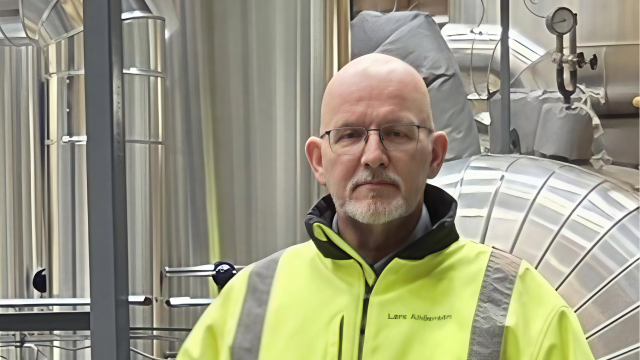
Author: Lars Bo Andersen, Head of Marine Innovation Centre, Ocean Division, Alfa Laval
The centre is where innovation happens and becomes reality. It's a hub where technologies are proven and made ready for marine operations. It allows us to move from concept to full-scale validation, ensuring our technologies are safer and more efficient. These capabilities are key to driving innovation and sustainability.” – Lars Bo Andersen
A full-scale environment
When visitors first set foot in the Marine Innovation Centre, they often stop for a moment to take in the scale.
The main hall stretches over 2,800 square metres and is filled with equipment connected by pipes to various systems including seawater, steam, fuel and exhaust. It almost feels like a giant engine room stuffed with Alfa Laval systems available for oceangoing vessels.
What happens here is not just theoretical research but practical engineering where systems are built, tested and continuously adapted.
Navigating a more complex reality
Decarbonization targets are tightening, fuel pathways are multiplying and the pressure to make the right long-term decisions has never been greater. Alfa Laval's role is to help customers navigate that complexity with solutions that work in practice.
Here the centre's critical role as a key development environment where complete systems are assembled and validated under controlled operating conditions.
Our recent change of name (previously we were known as the Alfa Laval Test & Training Centre) reflects what we have in fact long been: a co-creation hub where customers, partners and engineers work together to innovate new solutions.
As we see it, today’s maritime landscape is defined by five key priorities: decarbonization, energy transition, efficiency, collaboration and future readiness. These are addressed through the integration of fuel systems, combustion, heat recovery and emissions control into complete, functioning systems.
This means not only solving immediate challenges but preparing customers for fuels, system configurations and regulatory requirements on the journey towards low- and zero-carbon shipping.
From ambition to application
The energy transition will not be a single pathway. Shipowners today must weigh multiple fuel options – LNG, biofuels, alcohols (methanol/ethanol) and ammonia – while maintaining efficiency and compliance.
Our job is to help them move forward with confidence.
We work across the full energy chain, from fuel handling and combustion to emissions control and waste heat recovery. By combining modelling with full-scale engineering, we can understand how systems interact – not just individually but as part of a wider onboard ecosystem.
This system-level approach is one of our defining capabilities. Customers want solutions that work reliably, which is driving the shift away from fragmented equipment supply towards more integrated, end-to-end solutions that simplify operation, maintenance and performance.
This approach has driven the development of several landmark Alfa Laval solutions that are now in use across the global fleet. PureSOx exhaust gas cleaning and PureBallast ballast water treatment systems were both developed and validated here in response to tightening environmental regulations – giving shipowners proven, compliant solutions ahead of regulatory deadlines.
The centre has also been instrumental in advancing fuel supply systems for LNG, methanol and ammonia, and testing early-generation bio-oils under real operational conditions. We have also rigorously evaluated fuel cell technologies – including high-temperature PEM cells running on methanol and solid oxide fuel cells prepared for ammonia. That work concluded both technologies were not yet ready for maritime use.
Built for real-world innovation
The centre integrates boilers, fuel systems, exhaust treatment and energy recovery technologies into a single, connected set-up, with a 2 MW engine at its core. This replicates onboard conditions while offering the flexibility to adapt, modify and optimise.
The combination of scale and integration is what makes the centre a genuine innovation hub. Smaller facilities can verify whether individual component’s function, but developing the solutions customers actually need – solutions that work reliably across varying fuels, loads and conditions – requires understanding how systems interact at vessel scale.
Enabling the fuel transition
Since opening in 2014, the centre has evolved from an initial focus on emissions compliance to supporting the transition to new fuels.
Today we work with all the emerging fuels – each bringing new technical and safety challenges.
Ammonia is a good example. It requires new approaches to combustion and materials with a strong focus on safety at every stage of development. We began with small-scale experiments to understand flame stability, on the path to developing a full-scale system and demonstrating that ammonia or ammonia waste can safely be combusted in a fired boiler.
This iterative approach reflects how innovation happens in practice – gradually building understanding and validating performance. Testing one solution can often trigger ideas for new concepts and products, as unexpected insights emerge.
The centre has also driven important innovations in practical fuel management. For LNG vessels, it developed boil-off gas management solutions and enabled the use of boilers as gas combustion units. A particularly significant breakthrough was enabling methane to be used as a boiler fuel without requiring a larger boiler – solving a real cost and space challenge. The centre also developed a 3D-printed dual-fuel burner nozzle allowing both methanol and oil to be used in the same lance through separate flow paths, meeting class rules while giving operators greater fuel flexibility.
Alongside fuel innovation, the centre continues to develop environmental compliance solutions – including advanced particle filtration capable of capturing emissions down to black carbon particle size – ensuring customers stay ahead of evolving regulatory requirements.
Improving efficiency where it matters
Decarbonization isn't only about fuel choice. Efficiency remains one of the most immediate and accessible levers available.
At the centre, we focus on improving performance through combustion optimization, fuel handling and the development of waste heat recovery concepts – always considering how these elements interact as part of a complete system.
Even small efficiency gains, applied consistently, can translate into meaningful reductions in fuel consumption and emissions over time.
Evolving with the industry
The centre brings together customers, technology developers, engine makers and research partners to work through specific technical challenges in a shared environment. Some collaborations are formal; others begin with a simple idea to test – but everything is grounded in real vessel operations.
Meanwhile, we continue to invest in new capabilities, including expanded facilities and additional equipment such as a gas engine installation to support further system-level development.
The site is evolving into a more accessible experience hub for stakeholders, strengthening our role as a destination for decision support and innovation storytelling.
Staying ahead of what comes next
The shipping industry is in the midst of sustained transformation. New fuels and system configurations will continue to emerge. The challenge is to ensure they are practical, safe and scalable – which is our objective at the centre.
The key to all this is our talented people. You can see that in the way teams take ownership of their work and collaborate across disciplines.
Naturally, we put huge emphasis on safety culture. Working with fuels such as ammonia requires constant risk evaluation and open discussion about potential hazards.
Alfa Laval has invested heavily in the centre over time, and that will continue, reflecting our commitment to developing solutions that drive more efficient and sustainable maritime transport.
Explore more
Alfa Laval Marine Innovation Centre
The Alfa Laval Marine Innovation Centre is a unique research and collaboration hub that’s shaping the future of global shipping. In partnership with customers and many others, the centre is pioneering technologies that support marine decarbonization and pave the way for sustainable shipping.
Take a virtual tour of our test facility and see the engineering in action.
Testing with ammonia
Alfa Laval secures order for the world’s first marine boiler system for ammonia waste incineration.
Powering the energy transition with alternative fuel solutions
Wherever you are in your energy transition - and no matter which fuel you choose - Alfa Laval is here to support you. Our diverse portfolio covers traditional and alternative fuels, including LNG, LPG, methanol, biofuels and ammonia. From enabling alternative fuels to reducing consumption, our cutting-edge technologies and decades of experience deliver fuel-flexible and future-ready solutions that ensure a safe and efficient transition, accelerating your journey to net-zero.
LNG as fuel
Biofuel
Methanol as fuel
Ammonia as fuel
Continue to discover more about our solutions
Marine Expert-Ease
Sustainable shipping
Marine Innovation Centre
24/7 Service & Support
Subscribe to our newsletter
What’s new, what’s next, all in one glance.
Our marine newsletter is your strategic edge - curated insights on operational efficiency, future fuels, and regulatory shifts. Get focused insights on the latest technologies, regulations, and fuel readiness that matter right now. Transform uncertainty into a clear, actionable roadmap by subscribing to our newsletter. Get blogs and insights from our Marine experts delivered straight to your inbox!