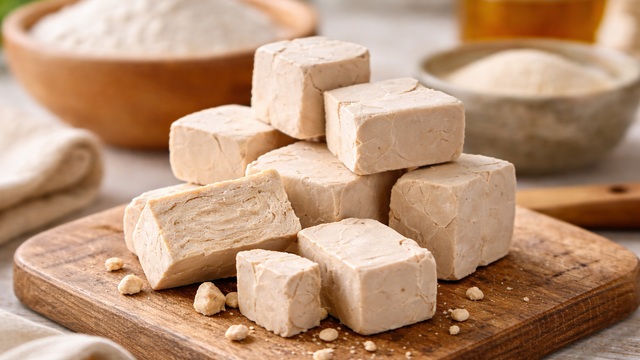
Yeast production
Yeast production is essential in global food, fermentation, and biotechnology industries, where process stability, hygiene, and efficiency determine product quality and cost. From raw material pretreatment to controlled fermentation, separation, and downstream processing, every step must be precisely managed. Modern industrial systems support operations, protect product functionality, and enable scalable yeast manufacturing that meets regulatory, performance, and sustainability requirements.
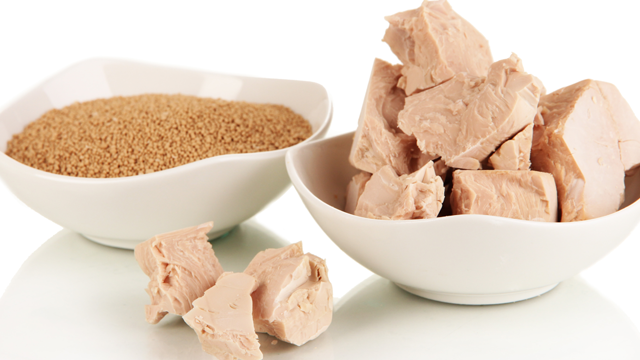
Improving efficiency across industrial yeast production
- Variations in molasses quality require robust pretreatment systems
- Fermentation performance depends on precise temperature control
- Product sensitivity demands gentle yet efficient separation methods
- Limited plant space calls for compact, flexible equipment layouts
- Environmental targets require reduced water use and waste volumes
Efficient yeast production depends on aligning process design with raw material variability, energy management, and product quality requirements. Understanding how yeast is produced at an industrial scale highlights the importance of integrated pretreatment, controlled fermentation conditions, and reliable separation to protect downstream performance. Stable process control across heat transfer, membrane filtration, heat exchangers, and high-speed separators supports consistent yeast for food applications while enabling flexible industrial yeast production.
By applying scalable technologies with low energy demand, yeast manufacturing facilities can improve yields, reduce operating costs, and meet sustainability and compliance goals across global markets, while maintaining long-term process stability and predictable performance under changing production conditions.
Happy customers
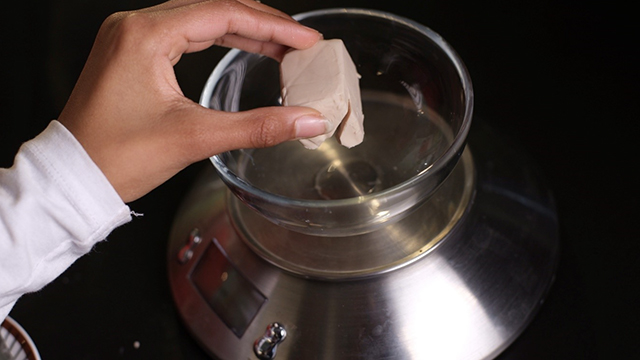
Core stages in the yeast production process
Efficient yeast production begins with pretreatment, where suspended solids such as sand, mud, and clay must be removed to protect downstream equipment and prevent sugar losses. Proper removal using strainers and hydrocyclones minimizes the need for additional wash water later in the process, reducing operating costs.
Alfa Laval’s molasses pretreatment systems are expertly designed to integrate key equipment from our core product areas, including fluid handling, separation, evaporation, and heat transfer. This integrated approach supports stable fermentation performance, reliable downstream processing, and consistent product quality across industrial yeast production facilities.
Temperature control and thermal management in yeast production
Throughout yeast production, precise thermal management is essential to maintain optimal fermentation conditions and protect product integrity. Heat exchangers are used to ensure accurate heating and cooling across multiple process stages. Their sanitary design, close temperature control, rapid response times, minimal product hold-up, and full clean-in-place capability support hygienic operation and reliable yeast manufacturing performance.
Yeast extraction and downstream processing
Yeast Extract Concentrate
Yeast extraction is used to produce yeast extracts from baker’s yeast or recovered brewer’s yeast for use as yeast for food ingredient. During controlled autolysis, yeast cell proteins are solubilized, after which cell walls are separated using high-speed separators to achieve efficient solids removal and maximum product recovery.
For polishing and pre-concentration, membrane filtration can be applied before final concentration by evaporation. This combination improves extract quality, supports efficient downstream processing, and ensures consistent results in yeast manufacturing operations.
Established technologies and industry standards
Separation technology has played a central role in yeast production since the early development of industrial fermentation. Equipment designed for gentle product handling, reliable discharge, and effective cleaning has become the industry standard for both baker’s yeast and yeast extract production.
The combined use of high-speed separators and membrane filtration enhances selectivity, improves product purity, and supports efficient downstream processing across a wide range of industrial yeast production applications.
Optimizing cost and footprint in yeast manufacturing
Compact evaporation and condensation solutions such as AlfaVap and AlfaCond provide significantly higher thermal efficiency than conventional shell-and-tube systems. These designs require less heat transfer area, resulting in lower investment and maintenance costs without compromising safety or reliability.
Their compact footprint reduces installation time and space requirements while allowing flexible capacity adjustments, making them suitable for both new yeast production lines and upgrades to existing yeast manufacturing facilities.
In addition to the benefits of AlfaVap, further cost savings can be achieved by using our custom membrane technology solutions for the concentration of yeast extracts and effluent treatment (vinasse). This technology can be implemented as a pre-concentration step before evaporation, offering cost savings for new production lines and enabling the de-bottlenecking of existing processes.
Sustainability and resource efficiency in yeast production
Sustainability is increasingly important in yeast production. Membrane filtration solutions reduce environmental impact by concentrating evaporator condensate, producing clean water streams for reuse, and minimizing waste streams with high biological (BOC) and chemical oxygen (COD) demand.
This approach lowers effluent treatment costs, improves overall process efficiency, and supports long-term environmental compliance while maintaining reliable industrial yeast production performance.
Other Alfa Laval Fermentation Applications
Alfa Laval’s expertise and equipment extend beyond yeast production, serving a wide range of fermentation applications. Our solutions are also used in the production of algae, amino acids, fodder yeast, organic acids, polysaccharides, vitamins, enzymes, and single-cell proteins, making us a trusted partner in the fermentation industry.