Pet food processing
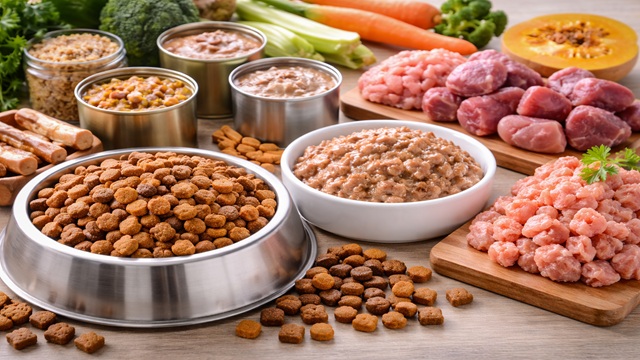
Pet owners increasingly expect higher nutritional value and safety in what they feed their animals. Manufacturers are rethinking ingredients, formulations, and production methods. Modern pet food processing handles fresh and concentrated meat efficiently while maintaining quality, hygiene, and cost control. By combining thermal treatment, separation, and moisture control, producers can integrate more meat into recipes and respond to evolving market demand without compromising stability.
Operational challenges and integrated process solutions
- Consistent cooling of viscous and chunky meat raw materials
- Hygienic processing with reduced air and oxygen exposure
- Stable control of fat and moisture levels
- Higher integration of fresh meat in dry pet food recipes
- Efficient system design with low space and maintenance demands
Reliable pet food processing depends on stable control across cooling, separation, and concentration steps. Modern pet food equipment supports consistent handling of fresh and frozen raw materials while minimizing air exposure and energy use. By combining pet food processing machines for grinding, centrifugal separation, and evaporation, producers can achieve predictable fat and moisture profiles even when input quality fluctuates. This integrated approach supports efficient pet food machine pet food production, enabling manufacturers to scale output, optimize formulations, and meet global quality expectations with confidence.
Pet food processing for evolving quality expectations
Pets play a more central role in modern households, driving demand for food with higher nutritional value and fresher ingredients. Traditional rendered meat is increasingly replaced by chilled fresh meat, while dry pet food producers focus on raising fresh meat content. This shift places higher demands on pet food processing systems that must manage sensitive raw materials while ensuring safety, consistency, and cost efficiency.
Cooling fresh meat by-products efficiently
Soft meat and fish by-products require gentle yet effective cooling to preserve quality. Cylindrical scraped-surface heat exchanger technology is designed to handle viscous, sticky, and particulate products without compromising hygiene. Products are cooled without air contact, reducing oxidation and contamination risks.
Compact construction minimizes floor space requirements while lowering labor and maintenance needs. Easy cleaning and robust design make this solution suitable for demanding raw materials commonly used in pet food processing environments.
Reducing moisture while preserving functionality
Concentrating fresh meat makes it possible to significantly lower the moisture content, typically by around 50%, using proven edible meat and fish processing principles. Precise control of fat and moisture levels ensures consistent output, even when raw material composition varies.
This stability enables dry pet food producers to incorporate more fresh meat into formulations while maintaining balanced diets. Concentrated meat technology also supports predictable downstream processing and simplified recipe management.
Integrated systems for controlled meat concentration
The concentrated meat system can be implemented either by raw material processors or directly by pet food manufacturers. It is adaptable to virtually all fresh meat types used in pet food production, providing flexibility across sourcing strategies.
The system includes three main process systems
- Raw material grinding and emulsification (max 3 mm particle size) of the fresh or frozen raw material.
- The Alfa Laval Centriflow system, with 3-phase decanter centrifuge technology and fat purification to provide meat solids, stick water, and fat.
- The AlfaVap evaporation system concentrates the stick water into a highly functional meat concentrate, which can be used separately as an abider or flavour enhancer in the pellet production stage.
The system combines grinding and emulsification of fresh or frozen raw material to a fine particle size, followed by three-phase centrifugal separation to recover meat solids, stick water, and fat. Evaporation technology then concentrates the sticky water into a functional meat concentrate. This concentrate can be used separately as a binder or flavor enhancer during pellet production, supporting both nutritional value and process efficiency.
Downloads
You might also be interested in...