Sustainable oil & fats processing: balancing environmental impact, compliance, and performance
The squeeze is on for the oil and fats industry, and edible oil processors are feeling it from three key directions.
On the face of it, the sector is enjoying a boom time with demand for products at an all-time high. In 2025 it was valued at USD 484.12 billion, with that expected to rise to USD 503.91 billion in 2026, and USD 698.08 billion by 2034. (Source: https://www.fortunebusinessinsights.com/industry-reports/fats-oils-market-100546)
A growing global population needs to be fed, while an ever-expanding element of that population is demanding more nutritious, healthier foodstuffs – both of which create fertile conditions for edible oil processors.
With so many edible oils rich in heart-healthy components such as polyphenols, oleic acid, vitamin E and omega-3 and omega-6 fatty acids, and with such a variety of products available on the market, there are clear opportunities for growth and profit among producers.
But the reality is not that simple. To make the most of these potentially bountiful times, operators in the oil and fats sphere need to manage the three-pronged pressure that comes from tightening environmental regulation, rising compliance cost, and the pressing business need to hit yield and quality targets.
Successful and sustainable processing needs to address all three of these factors without compromise or sacrifice, and that can only be done with the support of an expert partner who can bring knowledge and innovation born out of decades of experience working across multiple industries. An expert partner like Alfa Laval.
Environmental impact
Efficiently managing the processing demand for energy and water, alongside handling the volumes of waste produced, have become major factors in the oil and fats industry.
Success can be built on robustly tackling these challenges and with Alfa Laval, the equipment, technology and know-how is there to help. The industry is wide-ranging, but Alfa Laval’s breadth of knowledge means that they are adept at finding sustainable solutions whatever the process or product.
Indeed, continuous R&D investment has seen Alfa Laval developing more than 140 patents that are dedicated to edible oil refining solutions alone. These innovations are designed to make more from less, maximizing the efficient use of water and energy, and reducing losses.
Historically edible oil production is high on water consumption, and this is an area where Alfa Laval is continually exploring ways to reduce use and recirculate this most precious of commodities.
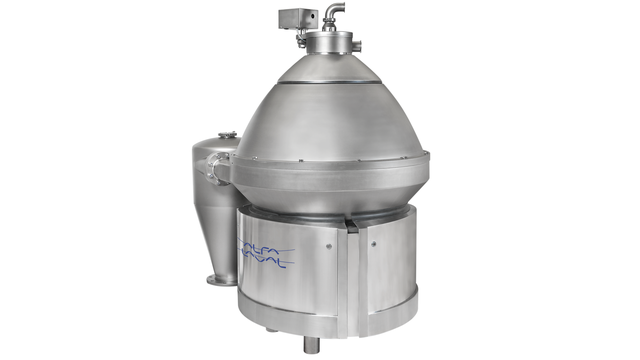
With high-efficiency disc-stack separators, optimized semi-hermetic designs and closed-loop water integration, Alfa Laval’s systems save water at this crucial point in the processing, whether it be crude oil polishing clarification. water or enzymatic degumming, neutralisation or oil washing.
When it comes to edible oil, the processes are also energy-intensive, specifically thermal energy, which is why having a world-leading heat exchange expert like Alfa Laval in support can make such a difference.
The deodorization stage is responsible for most of this energy use, and Alfa Laval’s advanced systems are designed to remove unwanted odour, flavour, colour and impurities using less steam and lower temperatures than comparable systems.
These modular systems can be customized to the customers’ exact processing need, whether that is refining seed oil, deacidifying tropical oils, or minimizing GEs and toxic trace elements.
One of Alfa Laval’s many patents includes a thin-film technology that ensures gentle, yet effective deodorization, while reducing energy use and processing temperatures. This comes with smart controls and instrumentation that make operation worry-free and ensure consistent, high-quality output.
Alfa Laval also has its customers’ backs when it comes to byproduct treatment and waste valorization. Making more with less underpins all successful sustainability drives, and developing new revenue streams from what was once waste is rewarding work.
Introducing technologies into traditional processes that are able to introduce a new circularity, recovering valuable proteins, fats, minerals and even fuel from material that previously only came with attached disposal costs, can be a gamechanger and boosts both the environment and the bottom line .
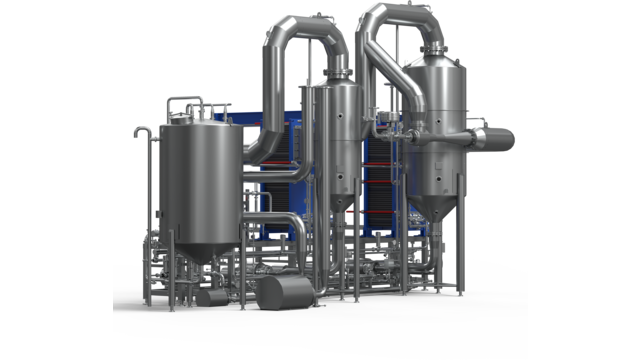
Alfa Laval is well versed in exploring all possibilities for customers in this regard, as decanters, disc-stack centrifuges and top-of-the-range evaporation systems such as AlfaVap can achieve amazing results on the processing line.
Compliance
As the industry grows, so the standards and regulations in oil and fat processing become tighter all over the world.
Producers need to have confidence that their equipment and the support they get from their expert partners is embedding compliance into their operations: whether that is the traceability of the raw materials, the impacts on the environment, the associated CO2 emissions, the safety and hygiene of the processing or the quality of the final product.
The European Union Deforestation Regulation (EUDR), for example, places tight controls on products such as coffee, soy and palm oil, and companies that place these products on the EU market for the first time, or export them, must be able to show that the products are deforestation-free and produced in line with relevant laws in the country of production. ( https://green-forum.ec.europa.eu/nature-and-biodiversity/deforestation-regulation-implementation_en)
With palm oil, Alfa Laval has worked closely with producers to apply its separation and evaporation expertise to boost the sustainability of their operations in the face of these stricter regulations, developing innovative solutions for the treatment of POME (palm oil mill effluent).
Traditionally POME was treated in ponding systems that potentially contaminated water sources, used up valuable land, and produced greenhouse gases. Alfa Laval has helped producers eliminate those impacts and comply with local regulations with the POMEVap, which separates the POME into clear water that can be reused or safely discharged, and sludge, which can be further treated and dried to produce valuable byproducts such as animal feed and fertilizer.
Aside from delivering the technology that delivers these major sustainability boosts to help ensure compliance with the strictest regulations, Alfa Laval also provides the supporting infrastructure around this, which will evidence the effectiveness of the oil and fats processing equipment.
No matter what the product, Alfa Laval can inspect and verify equipment performance as part of a comprehensive compliance package, and provide detailed inspection reports and condition assessments, along with complete equipment documentation, to prove compliance with a whole range of regulations from food safety to emissions reporting.
Performance
While responsible environmental stewardship and robust regulatory compliance are fundamental to the profitable and sustainable performance of an oil and fats producer, they must be achieved without impacting the quality and yield inherent in the final product.
Quality, because just as regulators are becoming more demanding, so are consumers, and in a market which is becoming more health conscious it is imperative to offer a product with maximum purity.
And yield, because not only does that boost the bottom line, but in a world where the food demand rises with the population growth, introducing systems and ideas that can make more with less could make all the difference in meeting the fundamental challenge of feeding the planet.
Fortunately for its customers – and the planet – high-performance is in Alfa Laval’s DNA and there is a precision in its thinking and engineering, and a drive to keep innovating, that ensures optimum operations.
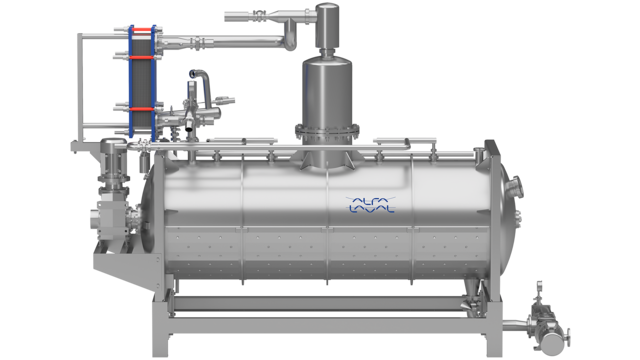
The Olive Oil Booster is a prime example of this and the latest milestone in this industry where Alfa Laval has continually transformed the processing landscape for almost a century.
Having introduced high-speed separators to the process in 1928, and decanter centrifuges in 1945, the Olive Oil Booster system drives performance even further with a combination of thermal and separation solution that replaces the traditional malaxer step.
It delivers significantly higher yield with improved purity and antioxidant properties compared to conventional olive oil processing, while also reducing water and energy consumption, highlighting Alfa Laval’s approach to dealing with the three-pronged ‘squeeze’.
The sustainable future of oils and fats
Predictions can be hostages to fortune in the always-evolving oil and fats processing world, but there are a few expectations that producers can reasonably hold on to as they look to future-proof their businesses.
Firstly, the demand for sustainable food is not going to diminish with the world’s population expected to reach 10.3 billion by the mid-2080s. And in terms of market trends, it seems unlikely that now the health bug has gripped large consumer groups, subsequent generations will decide to opt for unhealthier options over time.
Added to this, regulations are unlikely to be relaxed as the need to look after the planet and protect its resources stays at the top of the agenda.
The curve is likely to trend in the same direction, then, and throughout its history, Alfa Laval has positioned itself ahead of that curve and made sure it has the processes, the portfolio and the people to support producers in driving the industry forwards.
Whether it is the installation of a complete refining system or the upgrading of individual components, Alfa Laval can help customers tackle those big three challenges of environment, compliance and performance, and unlock the door to sustainable and prosperous operations.