
When efficiency improvements are proven, what are we waiting for?
Food and beverage manufacturers operate in an environment where change is approached with caution. Every process adjustment must maintain food safety, product quality, operational uptime and regulatory compliance. In such circumstances, established practices can feel like the safest option.
But are established practices always the safest choice? When proven improvements can reduce resource use while maintaining performance, doing nothing deserves the same scrutiny as making a change. As water scarcity, resource constraints and sustainability requirements influence the food industry, manufacturers are increasingly challenged to produce more while using fewer resources. The question is not only whether efficiency improvements are possible. It is how confidently the industry can adopt solutions supported by operational evidence.
Proven technology, cautious adoption
The food industry does not lack innovation. What often slows adoption is uncertainty. Will a different approach deliver the required cleaning performance? Will compliance be maintained? Will operators trust the change?
These are reasonable questions in a highly regulated industry. But caution can also delay improvements that are already technically available.
Many facilities have spent years optimizing production performance. Yet cleaning-in-place (CIP) systems are often treated as fixed requirements rather than processes with further potential for improvement. That assumption deserves closer examination.
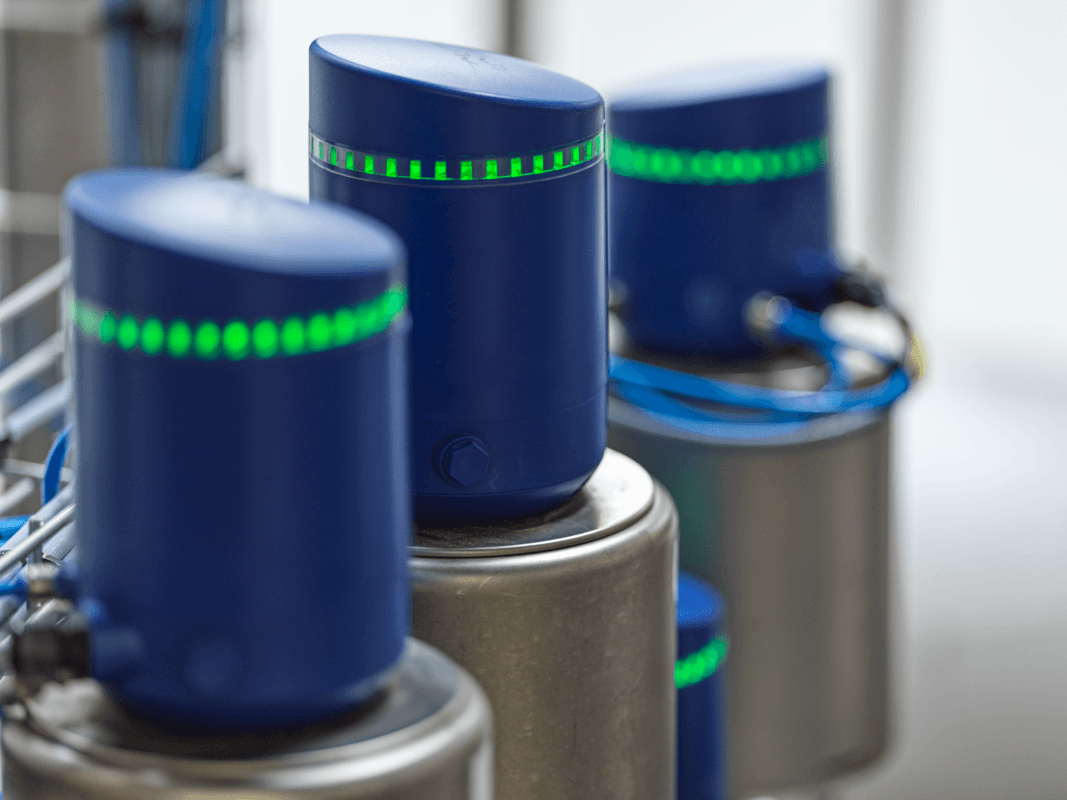
One example is pulse and burst seat cleaning in Alfa Laval ThinkTop® V50 and V70 sensing and control units. The technology reduces valve cleaning cycles from an industry reference of typical five seconds to less than one second while significantly reducing the amount of water and CIP media used. Rather than relying on longer cleaning sequences, burst cleaning uses a short cleaning cycle controlled by position rather than time to achieve the required cleaning result.
A shorter valve cleaning cycle may appear modest in isolation, but the potential becomes more significant when applied at scale. With full implementation in double-seat valves across the food and beverage industry, projected annual energy savings are 2.7 TWh.
Resource efficiency as a business consideration
Reducing water use can ease pressure on local water extraction and discharge. Lower energy and chemical use can reduce operating costs, while reduced water use at individual sites can support climate adaptation. These are specific resource-efficiency effects rather than a claim that one technology can deliver sustainability on its own.
The relevance is also increasing as policymakers focus on wastewater and water abstraction. Requirements and incentives vary by market, but efficient use of water, energy and chemicals is becoming an increasingly important operational consideration.
Rethinking risk
When evaluating a process change, manufacturers naturally focus on the risks of implementation. An equally useful question is what continued resource use may cost over time.
The opportunity is not to change for the sake of change. It is to question whether established processes are still the best use of the resources available. For food and beverage manufacturers, that means reassessing cleaning processes that may have remained unchanged for years, evaluating the evidence and acting where proven improvements are available.
The technology exists. The potential is measurable. And the pressure on water, energy and other resources is not going away. The time to act on the evidence and take greater responsibility for resource use is now.

Projected annual savings from industry-wide implementation of burst cleaning
Energy: 2.7 TWh projected annual savings
Equivalent to the annual heating needs of approximately 190,000 homes in the United States.
Emissions: 610,000 tonnes of CO₂e
Corresponding to the projected reduction in energy use.
Water: 30 million m³ projected annual savings
Equivalent to approximately 12,000 competition-style swimming pools.
Cleaning chemicals: 38 million m³ projected annual savings
Calculation basis: Figures are modelled, industry-wide projections based on full implementation of burst seat cleaning in double-seat valves across the food and beverage industry. They are not measured results from one facility and exclude potential effects associated with reduced wastewater handling and lower chemical production.
A real-world case for rethinking cleaning cycles
Location: Dairy production facility in Riyadh, Saudi Arabia
Technology: Alfa Laval ThinkTop® V70 with burst seat cleaning
Collaboration: Alfa Laval and Tetra Pak worked with the customer to activate the solution
CIP media reduction: From approximately 2.5 to 2.8 litres per conventional cleaning cycle to 0.8 to 1.0 litres with burst seat cleaning
Estimated reduction: Around 65% less CIP media consumption for valves cleaning
Expected annual savings: More than 1,330 tonnes of CIP media