Pharmaceutical manufacturing efficiency: Maximizing yield and returns through process optimization
Pharmaceutical manufacturers can unlock more capacity and higher returns without major capital investment. This article shows how targeted process improvements, from recovering product left in tanks to cutting energy and water use by 80%, can improve yield, reduce costs and prevent downtime.
Pharmaceutical manufacturers face growing pressure to reduce production costs, improve resource efficiency and get more from existing assets. Product losses, rising energy and water consumption, and equipment inefficiencies may erode profitability and limit production capacity. By improving processes, recovering more product and using data to improve equipment performance, manufacturers can increase usable output and strengthen return on investment (ROI) – often without major capital investment.
Advances in smart manufacturing and artificial intelligence (AI) are creating new opportunities to improve pharmaceutical production. Yet new technology is only part of the solution. Significant gains can also be achieved by identifying inefficiencies in existing processes and targeting improvements that increase yield, reduce resource consumption and improve equipment performance – delivering measurable business value.
Drawing on its expertise in fluid handling, separation and heat transfer, Alfa Laval helps pharmaceutical and biotechnology manufacturers optimize processes, improve resource efficiency and evaluate investments based on their long-term financial value.
Improve pharmaceutical manufacturing yield and reduce costs
One of the most direct ways to improve efficiency is to recover more of the product already being processed. Product losses in unit operations represent lost output and wasted resources. Product remaining in tanks after batch production, for instance, reduces the amount of usable product recovered. Improving yield can therefore increase usable production capacity without requiring additional batches or major process changes.
An international biotechnology company approached Alfa Laval to improve production yield. A performance audit revealed product losses of up to 20% due to incomplete tank drainage after batch production. After switching to Alfa Laval aseptic magnetic agitators, the company achieved nearly 100% yield, a 20% increase in product recovery and a payback period of less than a week. The results prompted the company to adopt additional agitators to further improve yield.
This example shows how targeted equipment improvements can turn product losses into measurable gains in recovery, productivity and ROI.
Reduce pharmaceutical production costs through resource efficiency
Recovering more product is only part of the efficiency equation. Energy and water consumption also influence production costs and environmental impact. Reviewing established processes can reveal opportunities to recover heat, reduce utility demand and lower the cost of manufacturing each batch.
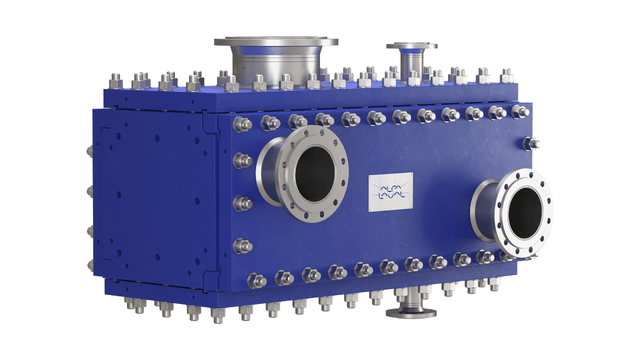
Working with a global manufacturer of diabetes medicine, Alfa Laval further developed its continuous heat-recovery technology for media sterilization. The solution reduced both energy costs and CO₂ emissions by 80%, while delivering significant water savings.
By recovering and reusing process heat, manufacturers can reduce resource consumption while improving operating economics. Combined with improved product recovery, these savings show how process optimization can deliver financial and environmental benefits without relying solely on increased production capacity.
Maximize production uptime with data-driven insights
Unplanned downtime can disrupt pharmaceutical production, put valuable batches at risk and increase costs. Data-driven insights can help manufacturers identify equipment inefficiencies, recognize early signs of declining equipment performance and take proactive maintenance measures.
Alfa Laval helps manufacturers improve equipment performance in two ways. The Alfa Laval Clariot condition monitoring system detects deviations in equipment performance, installation issues and mechanical wear, alerting operators before unplanned downtime occurs. Complementing Clariot, Alfa Laval Assessment and Advisory services provide expert evaluation of existing equipment and processes to uncover areas for optimization.
Together, they help pharmaceutical manufacturers improve equipment reliability, reduce avoidable downtime and get more value from existing assets.
Evaluate ROI across the equipment lifecycle
To understand the full value of these improvements, manufacturers need to look beyond equipment purchase prices. Total cost of ownership (TCO) accounts for maintenance, energy and water consumption, product losses and downtime throughout an asset's working life. Applying a robust, reliable and repeatable approach to TCO enables manufacturers to assess the true cost of ownership, compare investment opportunities and identify improvements that deliver lasting operational and financial value.
A targeted equipment upgrade may deliver a stronger ROI than a larger capital project if it improves yield, reduces resource consumption or increases usable production capacity. Evaluating opportunities against actual operating conditions, expected savings, maintenance requirements and anticipated payback targets helps manufacturers prioritize investments that deliver lasting value.
Taking a lifecycle approach connects individual efficiency improvements to broader business objectives, helping manufacturers make informed investment decisions based on long-term performance rather than upfront cost alone.
Turn pharmaceutical manufacturing efficiency into value
In an increasingly competitive environment, pharmaceutical manufacturers must increase yield, maintain product quality and control costs. Accomplishing this requires a connected approach to efficiency: recovering more product, using energy and water more effectively, and using equipment data to support reliable operations.
By turning targeted operational improvements into tangible financial value, Alfa Laval helps pharmaceutical manufacturers optimize existing processes, strengthen competitiveness and build more resource-efficient, resilient operations.
The opportunity is to produce more product that meets required quality standards, with fewer product losses, lower total cost of ownership and higher return on investment.